
Contents
When your garage door malfunctions, it’s crucial to act quickly to identify the issue. Common problems can often be resolved with simple steps. You might find alignment issues, obstructions, or a malfunctioning opener. Regular maintenance can also prevent future troubles. But what should you do when these quick fixes aren’t enough? Let’s explore some effective tips to get your garage door back on track.
Key Takeaways
- Check for gaps or alignment issues to ensure smooth door operation and prevent further damage.
- Clear any obstructions or debris from the door’s path to avoid operational disruptions.
- Inspect the garage door opener for power, unusual noises, and clean sensors regularly.
- Tighten all hardware, including bolts, screws, and hinges to maintain door stability and function.
- If problems persist or signs of malfunction appear, contact a professional for assistance.
Identify the Problem Quickly
How do you quickly identify a garage door problem? Start by checking the door alignment. If it’s off, you might notice gaps on one side or uneven movement during operation. This misalignment can lead to bigger issues, so it’s essential to catch it early.
Next, inspect the weather stripping. Worn or damaged weather stripping can let in moisture and pests, compromising your garage’s integrity. If you see cracks or it’s pulling away from the door, it’s time to replace it.
Listen to the door as it opens and closes. Any unusual noises could indicate mechanical issues.
Finally, keep an eye on the door’s movement; it should glide smoothly without hiccups. By focusing on door alignment and weather stripping, you can quickly pinpoint problems and take action, ensuring your garage remains functional and secure.
Check for Obstructions
Before attempting any repairs, check for obstructions around your garage door. It’s a simple step that can save you time and hassle.
Start by looking for common obstructions like debris, toys, or garden tools near the door’s path. Even small items can prevent your door from opening or closing properly.
Make sure to clear any obstacles, as they can damage the door or its components. While you’re at it, pay attention to the tracks and sensors. A little dirt or buildup can cause issues, so keep those areas clean.
Remember to take safety precautions while inspecting. Disconnect the power if you need to reach inside or around the door.
Inspect the Garage Door Opener
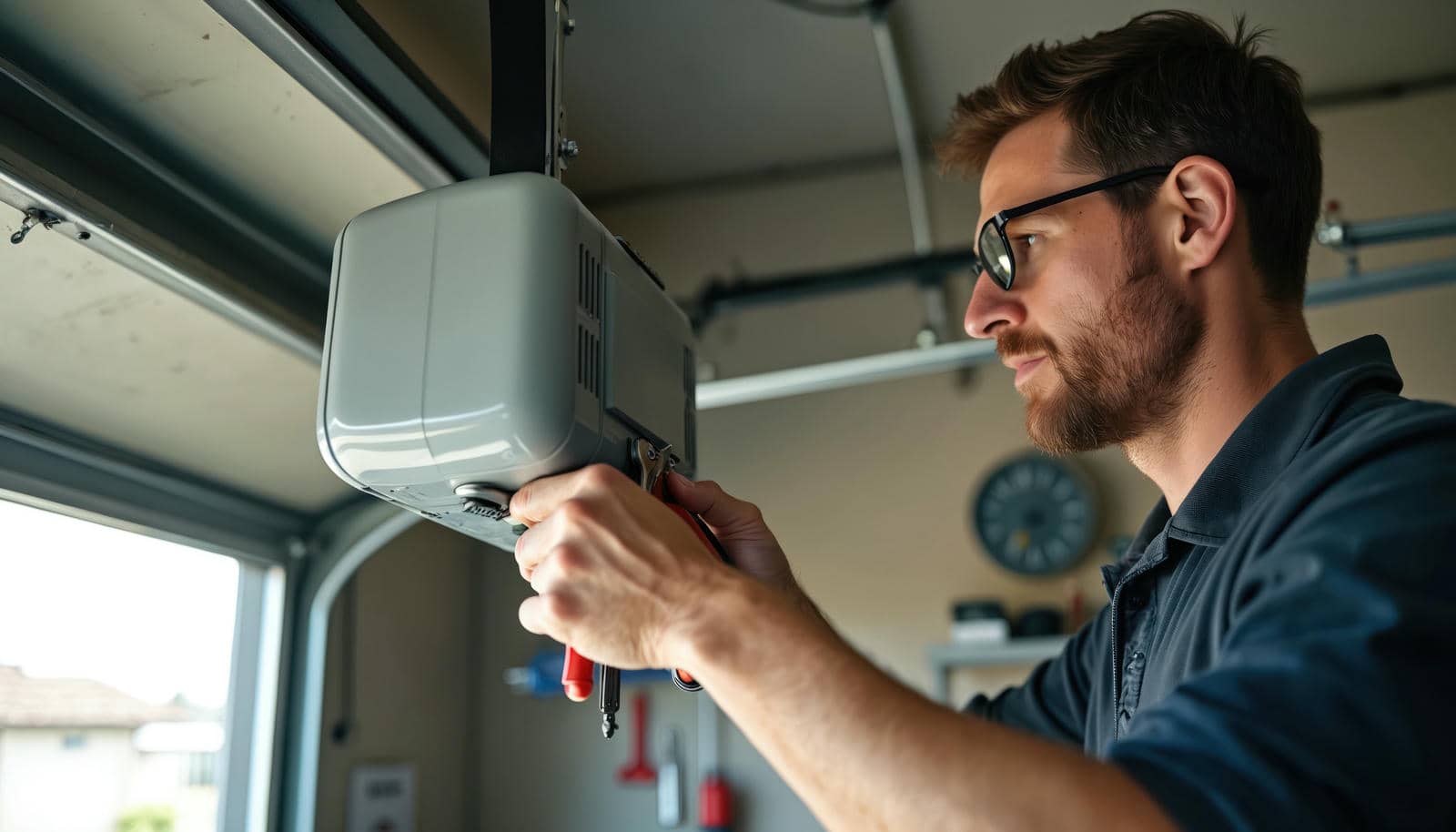
Inspecting the garage door opener is essential for ensuring your door operates smoothly. Start by checking the power source; make sure it’s plugged in and that the circuit breaker hasn’t tripped.
Next, listen for any unusual noises when you activate the opener. If you hear grinding or clicking sounds, it might indicate a mechanical issue.
For effective opener maintenance tips, regularly clean the sensors and verify they’re aligned properly. Dust and debris can cause them to malfunction. If your opener uses a remote, test the batteries and replace them if needed.
When issues arise, apply basic troubleshooting techniques: reset the opener by unplugging it for a minute, then plug it back in. This can often resolve minor glitches.
Tighten Hardware and Fasteners
Regularly tightening hardware and fasteners on your garage door can considerably extend its lifespan and improve functionality.
With just a few tools needed, you can ensure everything operates smoothly. Here’s what to focus on:
Bolts and Screws: Check and tighten all bolts and screws on the door and tracks.
Hinges: Inspect hinges for wear and ensure they’re secure.
Track Hardware: Make certain all track brackets and supports are firm.
Lift Cables: Examine cables for fraying and tighten their attachments.
Using basic tools like a socket wrench and screwdriver, you can address various hardware types, enhancing your garage door’s stability.
Taking the time to tighten these components minimizes noise and prevents future issues.
Building a routine around these quick fixes fosters a sense of community and pride in maintaining your home.
Call a Professional if Needed
While some garage door repairs can be tackled on your own, there are times when calling a professional is the best option. Knowing when to call for help can save you time, money, and potential injury.
Look for signs of malfunction, such as strange noises, the door not opening or closing properly, or visible damage to the door or tracks. If you notice any of these issues, don’t hesitate to reach out to a qualified technician.
Professionals have the expertise and tools to diagnose and fix problems efficiently. Additionally, they can handle more complex issues, like electrical or alignment problems, that may be beyond your skill level.
Frequently Asked Questions
How Often Should I Perform Maintenance on My Garage Door?
You should perform maintenance on your garage door at least twice a year. Following a maintenance checklist helps extend its lifespan and ensures it operates smoothly, keeping you and your home safe and secure.
What Tools Do I Need for Basic Garage Door Repairs?
Think of your garage door as a trusty steed. To keep it strong, gather essential repair tools: wrenches, screwdrivers, and pliers. Regular tool maintenance ensures they’re ready when you need them most for quick fixes.
Can I Fix a Garage Door Without Professional Help?
Yes, you can fix a garage door without professional help! Using DIY techniques, you can tackle common issues like misalignment or noisy springs. Just make certain you’ve got the right tools and follow safety precautions.
What Safety Precautions Should I Take During Repairs?
Always wear safety gear, like gloves and goggles, and check for electrical hazards before starting. Your safety’s essential; don’t overlook these precautions!
How Do I Reset My Garage Door Opener?
To reset your garage door opener, unplug it for about 30 seconds, then plug it back in. Follow the opener resetting techniques in your manual for troubleshooting any issues. You’ll have it working in no time!
Conclusion
In the world of garage door repairs, a stitch in time saves nine. By following these quick tips, you can tackle minor issues before they snowball into bigger problems. Remember to keep an eye on alignment, check for obstructions, and maintain your opener. Tightening hardware can make a world of difference, but don’t hesitate to call a professional if things get tricky. With a little diligence, your garage door can operate smoothly for years to come.
Recent Posts
3 Best Steps for Garage Door Installation
Did you know that many homeowners tackle garage door installation themselves? This statistic highlights the
How to Install Your Garage Door: Step-by-Step Guide
Installing your garage door might sound like a challenging task, but with the right approach,
Why Choose Affordable Garage Door Opener Help?
Why put off garage door issues when affordable help is just a call away? Choosing