
Contents
It’s interesting how a simple garage door malfunction can often be traced back to a faulty spring. If you find yourself facing this issue, it’s crucial to approach the garage door spring repair with the right techniques for safety and effectiveness. Knowing the proper steps can make all the difference in your repair process. Let’s explore the best practices to ensure your garage door springs are in top shape and functioning properly.
Key Takeaways
- Always start with safety precautions, including wearing protective gear and disconnecting power to the garage door opener.
- Identify the type of spring (torsion or extension) for effective repair and maintenance.
- Use the correct tools, such as winding bars and torque wrenches, for safe spring tension release and installation.
- Follow a systematic step-by-step approach for removing old springs and installing new ones to ensure proper functionality.
- Recognize when to call a professional, especially for signs of malfunction or if you’re unsure about handling high-tension springs.
Understanding Garage Door Springs and Their Function
Garage door springs are essential components that enable the smooth operation of your garage door. Understanding their function is important for maintaining garage door functionality.
There are two primary types of springs: torsion springs and extension springs. Torsion springs are mounted above the door and store energy through tight spring tension when the door is closed. As you open the door, this tension is released, allowing for a controlled ascent.
On the other hand, extension springs are located on either side of the door and stretch as the door opens, also creating spring tension that helps lift the door. Both types are significant in counterbalancing the door’s weight, ensuring it operates effectively.
Recognizing how these springs work can empower you to troubleshoot issues and engage in repairs, fostering a sense of belonging within a community of homeowners who value the functionality and safety of their garage doors.
Safety Precautions Before Starting Spring Repair
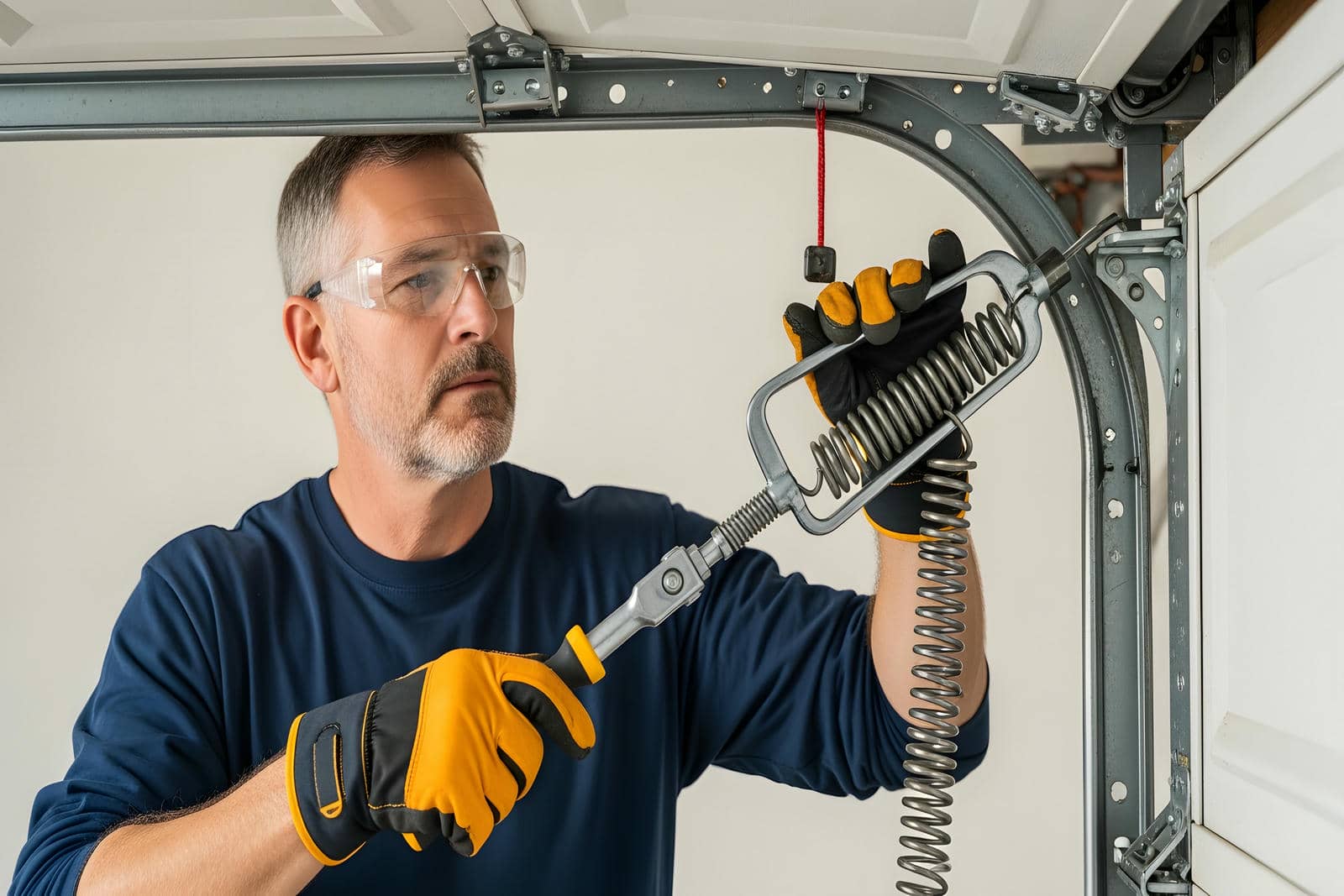
Before you start any spring repair, it’s essential to wear appropriate protective gear, such as gloves and safety glasses, to safeguard against injury.
Always disconnect the power supply to prevent accidental operation of the garage door while you’re working.
Finally, make sure the garage door is securely positioned to avoid any unexpected movement during the repair process.
Wear Protective Gear
When tackling garage door spring repairs, it’s essential to wear appropriate protective gear to ensure your safety.
Ensuring proper spring maintenance and injury prevention starts with the right equipment. Here’s a quick list of what you should wear:
- Safety goggles – Protect your eyes from flying debris.
- Work gloves – Keep your hands safe from sharp edges and potential pinches.
- Steel-toed boots – Shield your feet from heavy tools or springs that may fall.
- Dust mask – Prevent inhalation of dust and debris during the repair process.
Disconnect Power Supply
To ensure your safety during spring repairs, it’s crucial to disconnect the power supply of your garage door opener. Start by locating the circuit breaker that controls your garage door’s power source. Switch it off to ensure no electricity flows to the opener while you work.
This step prevents any accidental activation that could lead to severe injuries. Once the circuit breaker is off, double-check that the opener isn’t receiving any power by pressing the remote or wall switch; nothing should happen.
Secure Garage Door
Securing the garage door is essential for ensuring a safe working environment before you start any spring repairs. Proper garage door maintenance protects you and keeps your equipment safe.
Here’s how to secure garage mechanisms effectively:
- Close the Door: Ensure the garage door is fully closed to prevent accidental opening.
- Use Locking Mechanisms: Engage any built-in locking features for added security.
- Support the Door: Utilize a sturdy support bracket to hold the door in place during repairs.
- Clear the Area: Remove any tools or debris from the workspace to avoid tripping hazards.
Identifying the Type of Garage Door Spring
Understanding the type of garage door spring you have is crucial for effective repairs and maintenance. There are mainly two types of springs: torsion and extension. Torsion springs are mounted above the door and use torque to lift it, while extension springs are located on either side and stretch to provide lift.
For type identification, observe the spring’s characteristics. Torsion springs are typically coiled tightly and can be identified by their cylindrical shape. In contrast, extension springs appear as long, straight coils and are anchored to the door tracks.
When inspecting your garage door, note the spring’s placement and condition. This knowledge aids in repairs and enhances your understanding of your garage door system, fostering a sense of belonging in maintaining your home.
Accurate identification can save you time and ensure you have the right tools for any necessary repairs.
Tools Required for Garage Door Spring Repair
To successfully repair garage door springs, you’ll need a specific set of tools.
Essential hand tools like wrenches and pliers, along with safety equipment such as gloves and goggles, ensure both precision and safety during the process.
Additionally, specialized repair tools tailored for spring adjustments can greatly simplify your task.
Essential Hand Tools
When tackling garage door spring repair, having the right hand tools at your disposal is essential for both safety and efficiency.
To ensure a successful repair and follow spring maintenance tips, you’ll need:
- Wrenches – To loosen and tighten bolts.
- Screwdrivers – Both flathead and Phillips for various screws.
- Pliers – For gripping and twisting wires, especially during spring replacement options.
- Measuring tape – To measure springs accurately for replacements.
Equipping yourself with these essential hand tools will streamline the repair process, making it easier to address issues effectively.
Safety Equipment Needed
Safety should be your top priority during garage door spring repair, and having the right safety equipment is essential.
First, you’ll need safety goggles to protect your eyes from flying debris or sudden spring releases. These are vital, as the springs carry significant tension and can snap unexpectedly.
Next, gloves are required to safeguard your hands from sharp edges and potential injuries. Opt for heavy-duty gloves that provide both protection and grip, as you’ll be handling various components.
Additionally, consider wearing a hard hat to shield your head if you’re working near the garage door’s mechanism.
Specialized Repair Tools
Having the right safety equipment is just the beginning; you’ll also need specialized tools for effective garage door spring repair.
These tools ensure you can safely manage spring tension and facilitate the repair process. Here’s what you’ll need:
- Wrench Set – Essential for loosening and tightening the hardware.
- Pliers – Useful for gripping and twisting the springs and cables.
- Torque Wrench – Critical for adjusting the spring tension accurately.
- Repair Kits – Contain essential components for replacing worn or broken springs.
Investing in these specialized tools makes the repair more manageable and enhances your confidence in tackling the job.
With the right equipment at hand, you’ll feel a sense of belonging in the DIY community.
Step-by-Step Guide to Repairing Torsion Springs
Although repairing torsion springs can seem challenging, following a systematic approach makes the process manageable. Begin by verifying the garage door is fully closed and disconnect the opener. Next, release the spring tension safely using appropriate tools.
Here’s a quick reference table for your repair techniques:
| Step | Action | Tools Needed |
|---|---|---|
| 1. Safety Check | Verify door is closed | Safety glasses |
| 2. Release Tension | Use winding bars | Winding bars, gloves |
| 3. Replace Spring | Verify the door is closed | Socket wrench |
| 4. Rewind New Spring | Remove the old spring | Torque wrench |
Step-by-Step Guide to Repairing Extension Springs
While torsion springs have their unique repair methods, extension springs require a different approach.
To effectively repair extension springs, follow these steps for safety and precision:
- Disconnect Power: Unplug the garage door opener to eliminate any risk of accidental activation during your repair.
- Release Spring Tension: Carefully use winding bars to release tension from the extension springs. This is essential to prevent injury.
- Remove Old Springs: Detach the old springs from their brackets and take note of their orientation for reinstallation.
- Install New Springs: Position the new springs in the same orientation as the old ones, ensuring they’re securely fastened in their brackets.
Using these repair techniques will help you manage spring tension effectively.
Remember, always prioritize safety and take your time to ensure a successful repair.
With the right approach, you’ll feel accomplished and part of the DIY community.
When to Call a Professional for Garage Door Spring Issues
If you notice persistent problems with your garage door springs, it might be time to call a professional. Look for spring malfunction signs such as unusual noises, uneven door movement, or a door that won’t open or close properly. These issues can indicate deeper problems that require expert attention.
While DIY repairs are tempting, garage door springs are under high tension and can be dangerous to handle without proper knowledge. Professional service benefits include access to specialized tools, expertise, and safety measures that ensure the job is done right.
Additionally, professionals can diagnose underlying issues, preventing future problems and prolonging the life of your garage door system. Trusting an expert safeguards your safety and provides peace of mind, knowing the repair is completed to industry standards.
Don’t hesitate to reach out for help when needed; your garage door’s functionality depends on it.
Summary
Repairing garage door springs might seem intimidating, but with the right techniques and tools, you can tackle it safely and effectively. Don’t let fear hold you back; following these guidelines will ensure you maintain your garage door’s functionality. Remember, if at any point you feel unsure, reaching out to a professional is a smart choice. Your safety and the longevity of your garage door are worth the extra help!
Recent Posts
Why Follow This Garage Door Installation Guide?
When installing a garage door, a small mistake like misaligning the tracks can lead to
3 Best Steps for Garage Door Installation
Did you know that many homeowners tackle garage door installation themselves? This statistic highlights the
How to Install Your Garage Door: Step-by-Step Guide
Installing your garage door might sound like a challenging task, but with the right approach,