
Contents
Taking care of your overhead garage doors is more about maintenance than repairs. It’s essential to keep it functioning smoothly to avoid unexpected issues. By implementing a few straightforward practices, you can extend its lifespan and prevent costly fixes. From inspecting the door mechanism to testing safety features, there are key areas to focus on. Let’s explore the best maintenance tips that will keep your garage door in top shape.
Key Takeaways
- Regularly inspect the door mechanism for alignment, smooth operation, and check for any damage to rollers, springs, or tracks.
- Lubricate moving parts every six months using silicone spray, lithium grease, and dry lubricant to ensure smooth functioning.
- Check and tighten all hardware, including screws and bolts, to maintain proper door alignment and secure spring brackets.
- Test safety features like sensors and the emergency release mechanism to enhance safety and ensure the door operates correctly.
- Clean the door surface with mild detergent and water, followed by drying and applying a protective wax for added durability.
Regularly Inspect the Door Mechanism
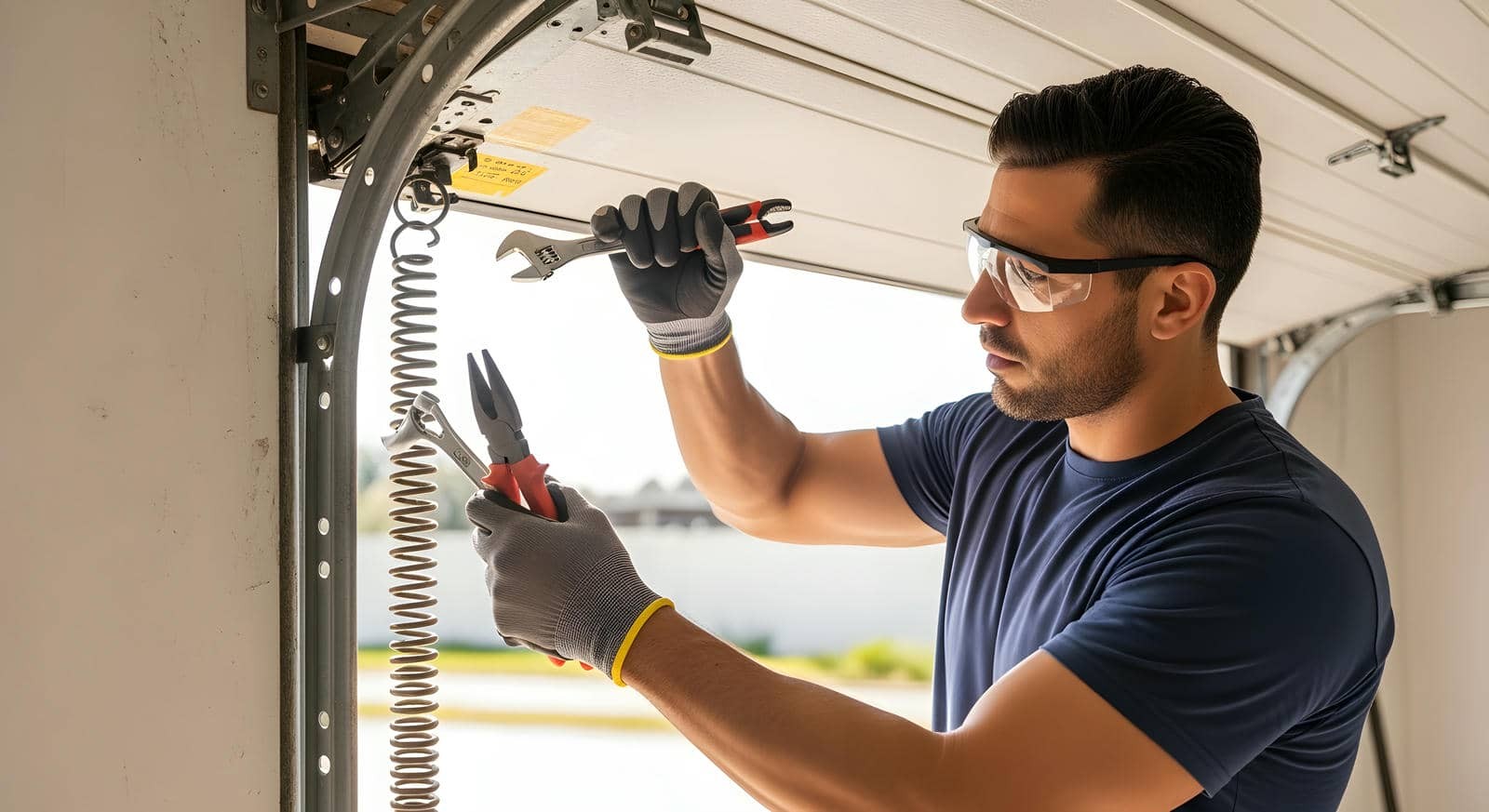
Regular inspections of your garage door mechanism are essential for its longevity and safe operation. You should check door alignment regularly, as misalignment can lead to uneven wear and potential failure.
Start by observing the door while it opens and closes; it should move smoothly without binding or straining. Look for gaps between the door and the frame, which may indicate alignment issues.
Next, monitor signs of mechanism wear. Inspect the rollers, springs, and tracks for any signs of damage or rust. If you notice excessive wear, it’s vital to address it promptly to prevent costly repairs or unsafe conditions.
Tightening loose hardware and ensuring all components are functioning correctly can extend the lifespan of your garage door. By taking these proactive steps, you’ll maintain both safety and efficiency, fostering a sense of belonging within your home environment.
Regular checks signify your commitment to home maintenance and overall safety.
Lubricate Moving Parts
After ensuring your garage door mechanism is properly aligned and free of wear, the next step is to lubricate the moving parts. Regular grease application helps minimize friction, ensuring smooth operation. Use high-quality oil types specifically designed for garage doors, such as silicone-based or lithium grease.
Here’s a quick reference table to guide you:
| Component | Recommended Lubricant | Frequency of Application |
|---|---|---|
| Hinges | Silicone spray | Every 6 months |
| Rollers | Lithium grease | Every 6 months |
| Tracks | Dry lubricant | Every 6 months |
| Springs | Light oil | Annually |
Check and Tighten Hardware
Making sure that all hardware is secure is essential for the safe and efficient operation of your garage door. Start by inspecting the hinges, rollers, and tracks for any loose screws or bolts. Tighten these components to maintain proper door alignment, which is vital for smooth operation.
Next, check the brackets that hold the garage door springs; they should be secure to prevent any unexpected movement.
If you notice any sagging or misalignment, it might be a sign that the spring tension needs adjustment. Be cautious—improper handling of springs can lead to injury. Always consult a professional if you’re unsure about making adjustments yourself.
Regularly checking and tightening hardware enhances your garage door’s performance and prolongs its lifespan. By keeping everything secure, you create a safe environment for your family and belongings.
Test Safety Features
Once you’ve secured the hardware, it’s time to check the safety features of your garage door.
Start by testing the safety sensors. These sensors should detect any obstruction in the door’s path, preventing it from closing if something is in the way. To do this, place a small object, like a piece of wood, in the door’s path and activate the door. If the door reverses, the sensors are functioning properly.
Next, verify the emergency release mechanism works correctly. This feature allows you to manually open the door in case of a power failure. Pull the emergency release cord to disengage the opener, and then lift the door manually. It should move smoothly without sticking.
Regularly testing these safety features keeps you and your family safe and verifies your garage door operates efficiently.
Prioritize these checks to foster a secure environment for everyone.
Clean the Door Surface
Cleaning the door surface is essential for maintaining the appearance and functionality of your garage door. Regular door cleaning enhances its aesthetic and prolongs its lifespan by preventing rust and corrosion.
Here’s how to effectively clean and protect your garage door surface:
- Use a mild detergent mixed with water for gentle cleaning.
- Employ a soft cloth or sponge to avoid scratching the surface.
- Rinse thoroughly with clean water to remove all soap residues.
- Dry the door with a soft towel to prevent water spots.
- Apply a protective wax or sealant to enhance surface protection.
Frequently Asked Questions
How Often Should I Replace My Garage Door Remote Batteries?
You should replace your garage door remote batteries every six to twelve months, depending on usage. Regular remote battery maintenance ensures your garage door accessories function properly, keeping your home secure and convenient.
Can I Paint My Garage Door?
Yes, you can paint your garage door. Choose suitable garage door colors and use proper painting techniques for durability. Make certain you clean the surface and apply a primer before painting to achieve the best results.
What Should I Do if the Door Gets Stuck?
If your door gets stuck, check for door alignment issues and make certain the tracks are free of debris. Apply track lubrication to reduce friction, helping the door operate smoothly and enhancing its lifespan.
How Do I Know if My Garage Door Springs Need Replacing?
When your garage door’s springs start to wear, it’s like a clock ticking down. Regular spring inspections reveal replacement signs; listen for strange noises, check for gaps, and watch for uneven door movement. Don’t ignore these clues!
Are There Any Safety Tips for Kids Around Garage Doors?
To ensure garage door safety, teach kids about the door’s movement and keep a safe distance. Install sensors and encourage child awareness of potential hazards, fostering a secure environment while promoting responsible behavior around garage doors.
Final Thoughts
By following these five maintenance tips, you can greatly extend the life of your overhead garage door. Notably, regular maintenance can reduce repair costs, ensuring your door operates smoothly and safely. Don’t overlook the importance of inspections and lubrication; they’re essential in preventing wear and tear. By committing to these practices, you enhance efficiency and protect your investment, making your garage door a reliable asset for years.
Recent Posts
Steel vs Wood Garage Doors: A Head-to-Head Comparison
If you think garage door material is just a style choice, it isn’t. You’re also
Single vs Double Garage Door: Picking the Right Configuration for Your Home
Choosing between a single and double garage door affects more than looks. You need to
Garage Door Financing Options: Pay Over Time Without Surprises
Most of homeowners delay big repairs because of cost, and a new garage door can