
Contents
Yes, you can sometimes open a garage door with a broken spring, but you shouldn’t treat it like a normal lift. The door may weigh far more than you expect and can shift without warning, so you need to disconnect the opener, secure the door, and use controlled help if you must move it. The real question is whether it’s worth the risk, and that depends on a few critical checks first.
Key Takeaways
- Yes, but opening a garage door with a broken spring is high-risk and should be treated as an emergency.
- Disconnect the opener first; the door can suddenly shift, bind, or drop without warning.
- If you must move it, lock the area and lift only with two people and proper control.
- Use locking pliers or C-clamps on the tracks to help secure the door before attempting to lift.
- Call a garage door professional if the door feels heavy, uneven, or unsafe to move.
Can You Open a Garage Door With a Broken Spring?
Yes, technically you can open a garage door with a broken spring, but you should treat it as a high-risk task.
If you’re asking, can you open a garage door with broken spring, the answer depends on the door’s weight, balance, and opener condition. You’ll need to disconnect the opener, secure the area, and lift the door only if you can control it smoothly.
Use two people if possible, and keep hands, feet, and clothing clear of pinch points. Many homeowners in your situation choose to stop and call a qualified technician, because that’s the safest way to protect your space and your crew.
If the door moves unevenly, binds, or feels unusually heavy, don’t force it. Stop, reassess, and get help promptly.
Why a Broken Spring Makes the Door Dangerous
A broken spring turns a garage door from a counterbalanced system into a heavy, uncontrolled panel. When the spring fails, you lose the force that offsets most of the door’s weight, so every inch of movement demands far more effort from you and the opener.
That extra load can cause the door to drop, bind, or shift off track without warning. You’re also more likely to strain a shoulder, pinch a hand, or damage the opener if you force it.
The door may look manageable, but it isn’t stable. Treat it like equipment under failure: unpredictable, stressed, and unsafe to lift alone.
If you’re dealing with this problem, you’re not overreacting by stopping. You’re protecting yourself, your family, and your garage system.
How to Lock the Garage Door Before Lifting It
Before you try to lift a garage door with a broken spring, lock it in place so it can’t move unexpectedly. Disconnect the opener, then pull the red release only if the door is fully closed and stable.
Slide a pair of locking pliers or C-clamps onto both vertical tracks just above a roller on each side. Tighten them firmly so the door can’t rise or drop. If your tracks don’t allow clamping, use a rated door lock or have another person hold the door from inside while you secure it.
Check that the bottom seal sits flat and that the panel doesn’t shift when you test it gently. This step protects you, your family, and anyone helping.
How to Lift the Door Safely in an Emergency
If you must lift a garage door with a broken spring, treat it as a two-person job and move slowly, with one person on each side of the door.
Grip the bottom section at waist height, keep your back straight, and lift together in a steady, controlled motion. Use the door’s full width to share the load, and don’t twist or jerk.
Pause every few inches to feel for binding, then keep both hands clear of hinges and tracks.
Once the door reaches the open position, secure it immediately with locking pliers or another mechanical stop on the tracks.
Never stand beneath an unsupported door. Stay coordinated, communicate clearly, and trust the plan you’ve set together.
When to Call a Garage Door Repair Pro
Call a garage door repair pro as soon as the door feels too heavy, shifts unevenly, or won’t stay secured, because a broken spring can make the door dangerously unstable.
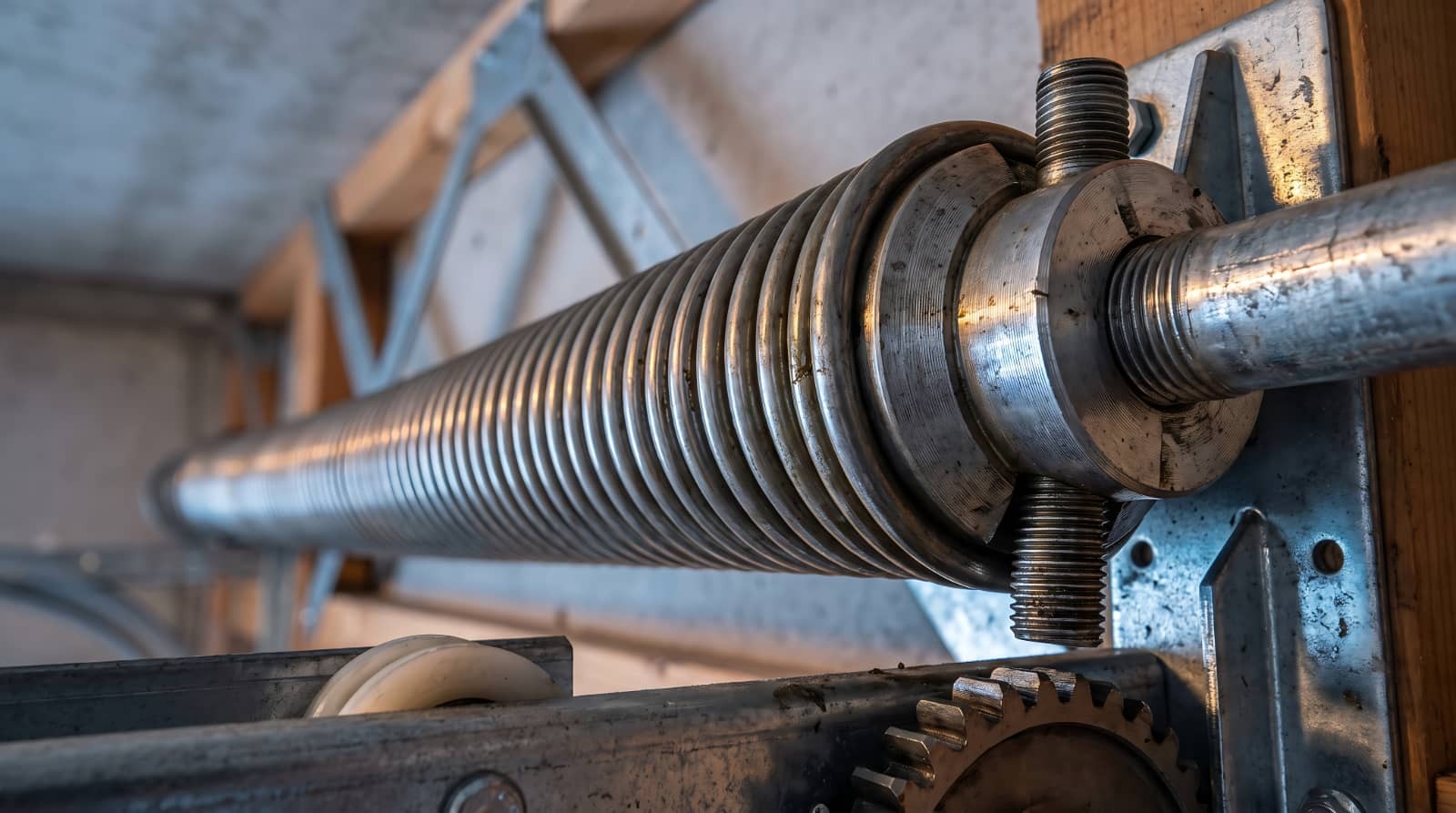
If you hear a sharp snap, see a gap in the torsion spring, or notice cables off the drums, stop using the door immediately. You shouldn’t force the opener, because it can strip gears, bend tracks, or worsen the break.
A qualified technician can release tension, replace matched springs, and verify balance, alignment, and cable condition with the right tools.
When you call early, you protect your household, avoid repeat failure, and keep your garage functioning as a safe shared space.
Trust trained help, stay clear of moving parts, and let the system be restored correctly.
Frequently Asked Questions
How Long Do Garage Door Springs Typically Last?
Garage door springs typically last about 7 to 12 years, or 10,000 cycles. You’ll extend life with balanced doors and regular inspection, and you shouldn’t touch worn springs yourself—call a trained technician.
What Are the Signs a Spring Is About to Break?
You’ll notice warning signs like a tired bowstring: loud bangs, uneven lifting, gaps in the coil, rust, fraying cables, or jerky movement. Stop using the door, keep clear, and call a technician fast.
Can One Broken Spring Damage the Garage Door Opener?
Yes, one broken spring can damage your opener because you’ll force it to lift extra weight, straining the motor, trolley, and gears. You should stop using it, disconnect power, and call a technician.
Are Torsion and Extension Springs Repaired Differently?
Yes, you repair torsion and extension springs differently: torsion springs need shaft-mounted replacement and careful balancing, while extension springs require paired, side-mounted changes. You’ll need proper tools, because each system stores dangerous energy differently.
How Much Does Spring Replacement Usually Cost?
It usually costs $150-$350 to replace a garage door spring, but the final bill can jump with part type, labor, and emergency service. You’ll want a pro—the tension’s dangerous, and you deserve reliable support.
Review
If you’re facing a broken spring, treat the garage door like a heavy blade on a loose hinge—unpredictable and dangerous. You can open it in an emergency, but only if you disconnect the opener, lock the door in place, and lift with two people for control. Move slowly, keep hands clear, and stop if the door shifts. When the door won’t stay steady, call a garage door pro right away.
Recent Posts
Steel vs Wood Garage Doors: A Head-to-Head Comparison
If you think garage door material is just a style choice, it isn’t. You’re also
Single vs Double Garage Door: Picking the Right Configuration for Your Home
Choosing between a single and double garage door affects more than looks. You need to
Garage Door Financing Options: Pay Over Time Without Surprises
Most of homeowners delay big repairs because of cost, and a new garage door can