
Contents
Garage door springs are under immense tension and can be dangerous if mishandled. Understanding the various garage door spring repair types and their specific repair techniques is vital for any DIY enthusiast. In this quiz, you’ll explore essential safety precautions, identify signs of a broken spring, and learn step-by-step repair methods. Mastering these skills can make your garage door maintenance safer and more efficient. Are you ready to test your knowledge?
Key Takeaways
- Identify signs of a broken spring, such as unusual noises or visible damage, to determine the need for repair.
- Gather essential tools like wrenches, pliers, and safety gear before starting the repair process for efficiency and safety.
- Secure the garage door properly and disconnect power to prevent accidents during spring replacement.
- Follow a step-by-step guide for replacing springs, ensuring proper tension adjustment for optimal door functionality.
- Call a professional if you encounter unusual noises, visible damage, or safety concerns while handling heavy springs.
Understanding Garage Door Spring Types
When you’re dealing with garage door issues, understanding the different types of springs is vital for effective repairs. There are two primary types: torsion springs and extension springs.
Torsion springs are mounted above the door, using torque to lift the door efficiently. They’re known for their durability and ability to handle heavier doors, making them a popular choice for many homeowners.
On the other hand, extension springs are located on either side of the door and extend when the door is lowered, providing lifting power as they contract. While they’re generally easier to replace, they can wear out faster than torsion springs.
Identifying which type you have is significant, as it affects both the repair process and the tools you’ll need. By recognizing the differences, you’ll be better equipped to tackle your garage door problems with confidence and ensure your door operates smoothly.
Safety Precautions Before Starting Repairs
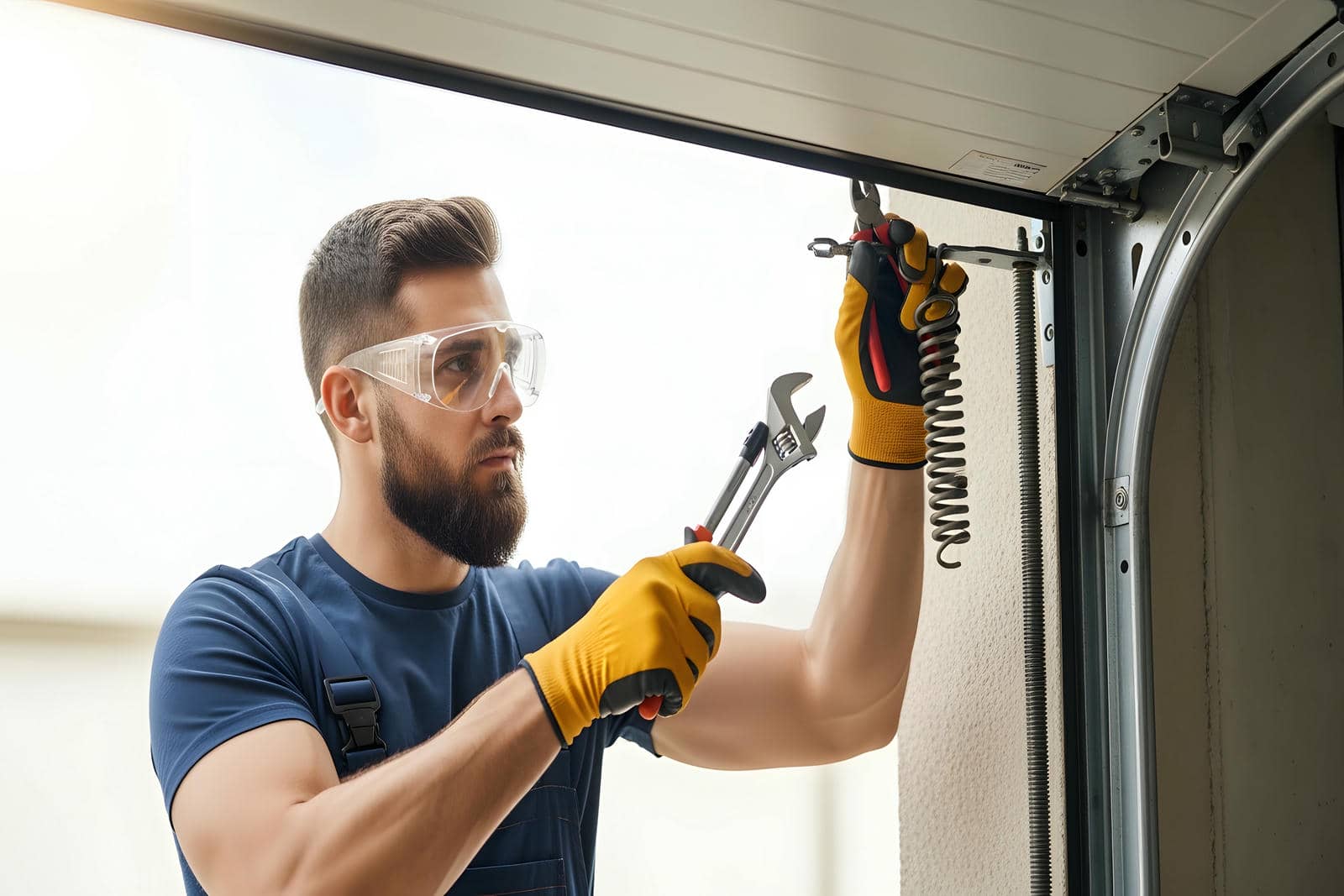
Before diving into garage door spring repairs, it’s essential to prioritize your safety. Start by wearing appropriate safety gear. This includes safety glasses to protect your eyes from flying debris and gloves to safeguard your hands from sharp edges. A sturdy pair of work boots can also prevent injuries, ensuring you have a firm grip while working.
Next, familiarize yourself with emergency procedures. In case of an accident, you should know how to quickly shut off power to the garage door and have a first aid kit nearby. It’s also wise to inform someone about your repair plans, so they can check on you if needed.
Lastly, never attempt repairs alone. Having a buddy can make the process safer and more efficient. By taking these precautions, you’re setting yourself up for a successful and safe garage door spring repair experience.
Tools Required for Spring Repair
To effectively repair garage door springs, you’ll need a specific set of tools to ensure safety and efficiency.
Essential hand tools include wrenches, pliers, and a torque wrench, while safety equipment like gloves and goggles is vital for protecting yourself during the process.
Gathering these tools ahead of time can streamline your repair efforts and enhance safety.
Essential Hand Tools
Repairing garage door springs requires specific hand tools that assure safety and efficiency throughout the process.
Using the right tools eases the repair and ensures proper tool maintenance. Here are four essential hand tools you’ll need:
- Wrenches – Ideal for loosening and tightening nuts and bolts.
- Pliers – Essential for gripping and twisting wire or springs.
- Screwdrivers – Required for adjusting or removing screws.
- Torque Wrench – Critical for applying the right amount of torque to prevent over-tightening.
Having these essential hand tools on hand will make your spring repair task smoother and more effective.
Safety Equipment Needed
Having the right hand tools is just the first step in ensuring a safe garage door spring repair.
You’ll also need essential safety equipment to protect yourself during the process. Start with safety goggles; they shield your eyes from flying debris or accidental releases of tension.
Next, prioritize glove usage; a sturdy pair of work gloves will safeguard your hands from sharp edges and heavy components.
Additionally, consider using a sturdy ladder to reach high springs safely. If you’re working alone, a set of clamps can help stabilize the door while you work.
By equipping yourself with these safety tools, you foster a secure environment, allowing you to focus solely on the task at hand.
Safety first ensures a successful repair.
Identifying Signs of a Broken Spring
When you suspect a broken garage door spring, pay attention to unusual noise patterns during operation, as these can indicate mechanical failure.
You might also notice door movement issues, such as slow or uneven opening and closing.
Additionally, inspect the springs for any visible damage, such as gaps or breaks, to confirm the problem.
Unusual Noise Patterns
Unusual noise patterns from your garage door can signal a broken spring, and recognizing these sounds early can prevent further damage.
Pay attention to these unusual sounds during operation:
- Grinding: This may indicate rust or wear affecting the spring.
- Banging: A loud bang could mean the spring has snapped or is misaligned.
- Creaking: Persistent creaking noises suggest wear and tear that requires immediate attention.
- Popping: If you hear popping sounds, it’s a sign that the spring is under excessive tension.
Using these diagnostic techniques will help you identify spring issues before they escalate.
Don’t ignore these sounds—address them to ensure your garage door operates smoothly and safely.
Door Movement Issues
If your garage door struggles to open or close smoothly, it could be a clear indication of a broken spring. You might notice that the door doesn’t align properly when it’s in motion.
This misalignment often results from inadequate spring tension, which can impede the door’s movement. If you’re experiencing issues, it’s essential to check the door alignment first. A simple spring adjustment may resolve the problem, restoring smooth operation.
However, if the door still hesitates or gets stuck, the spring may need replacement. Always ensure safety by disconnecting the opener and securing the door before attempting any adjustments.
Understanding these signs can help you maintain your garage door’s functionality and keep your home secure.
Visible Spring Damage
Visible spring damage can be easily spotted with a careful inspection of your garage door’s components. Conducting a visible spring inspection allows you to identify critical issues before they escalate.
Here are some common spring wear indicators to look out for:
- Cracks or Breaks: Inspect the coils for any visible cracks or breaks.
- Rust or Corrosion: Look for signs of rust, which can weaken the spring.
- Uneven Coils: Check if the coils are evenly spaced; unevenness may indicate wear.
- Loud Noises: Listen for unusual sounds during operation, signaling potential spring failure.
Step-by-Step Guide to Replacing Torsion Springs
Replacing torsion springs on your garage door can seem intimidating, but with the right approach, you can tackle it effectively.
Begin by gathering your tools: winding bars, a socket wrench, and safety goggles. Start by securing the door in the closed position and loosening the set screws on the spring. Carefully unwind the spring using winding bars, ensuring you follow the manufacturer’s instructions for torsion spring installation.
Once the old springs are removed, install the new springs, securing them tightly.
Next, adjust the spring tension by winding the new springs according to your garage door’s weight and specifications. This step is essential for ideal door performance.
After adjustment, replace any hardware and test the door’s functionality. Remember, safety is paramount, so if you feel uncertain at any step, don’t hesitate to consult a professional.
With patience and precision, you’ll have your garage door operating smoothly again.
How to Replace Extension Springs
When your garage door starts to struggle with opening or closing, it might be time to replace the extension springs. This process can be straightforward if you follow these key steps for a successful extension spring installation:
- Disconnect the Power: Always unplug the garage door opener to ensure safety during the repair.
- Remove the Old Springs: Carefully detach the old springs from the brackets and hooks, using a socket wrench if necessary.
- Install New Springs: Position the new extension springs in the same location, making sure they’re securely fastened.
- Adjust Spring Tension: After installation, make sure to perform a spring tension adjustment for maximum performance. This ensures your door operates smoothly.
Common Mistakes to Avoid During Repairs
During garage door spring repairs, it’s easy to overlook critical details that can lead to complications. One common mistake is believing repair myths, such as assuming all springs have the same lifespan. Each spring type varies, and using the wrong one can shorten the door’s functionality.
Another error is neglecting safety precautions. Always disconnect the power before beginning repairs and wear protective gear. Failing to secure the door properly can result in accidents.
Furthermore, don’t underestimate the importance of proper tension adjustment. Over-tightening or under-tightening springs can lead to premature wear and tear, affecting the entire system.
Lastly, ensure you’re using quality replacement parts. Cheap substitutes might save money upfront, but they’ll likely lead to more repairs down the line.
When to Call a Professional for Help
While some garage door spring repairs can be tackled independently, knowing when to call a professional is crucial for your safety and the door’s functionality.
Here are some specific scenarios where you should consider seeking professional services:
- Unusual Noises: If your garage door makes grinding or popping sounds during operation, it’s a sign of serious issues.
- Visible Damage: Cracks or breaks in the springs indicate they need expert evaluation and replacement.
- Door Imbalance: If your garage door doesn’t open or close evenly, it may require professional adjustments.
- Safety Concerns: If you’re unsure about handling heavy springs or tools, calling in a professional can prevent accidents and reduce repair costs.
Investing in professional services ensures proper repairs and enhances the longevity of your garage door system.
Always prioritize your safety over DIY attempts.
Review
Mastering garage door spring repair techniques enhances your DIY skills and ensures safety and satisfaction. By diligently differentiating spring types, demonstrating due diligence with safety precautions, and avoiding common missteps, you can confidently tackle repairs. Remember, if the task seems too tough, don’t hesitate to call a professional. Embrace the expertise, engage in effective practices, and elevate your garage door maintenance game. Happy repairing!
Recent Posts
10 Must-Have Safety Features for Overhead Doors
When it comes to selecting overhead doors, understanding essential safety features is crucial for functionality
5 Best Tips for Troubleshooting Garage Door Issues
When your garage door malfunctions, it can be frustrating. You need to start by checking
What Are Common Garage Door Opener Issues?
Like a well-oiled machine, your garage door opener should function seamlessly, but that’s not always