
Contents
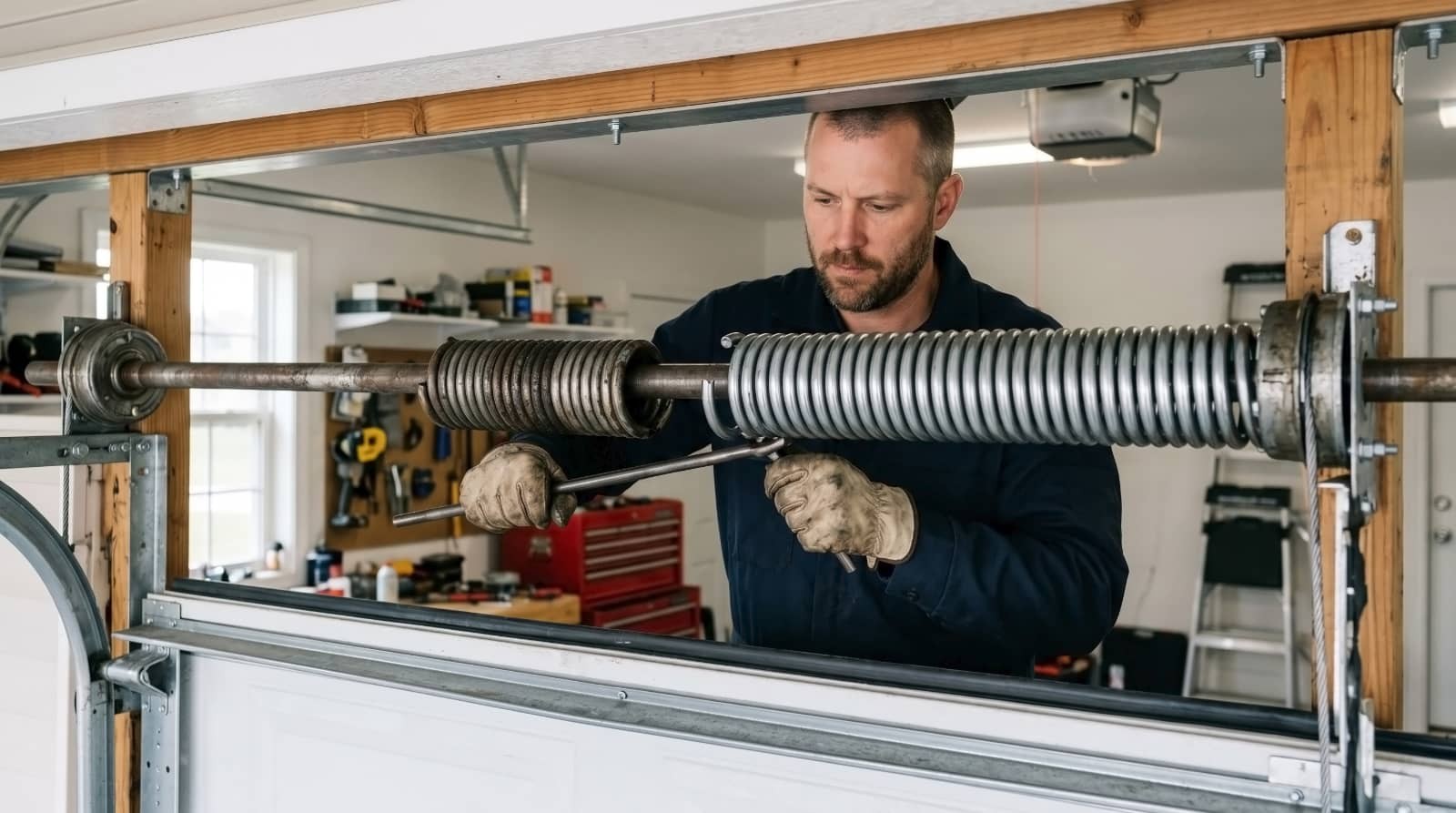
A garage door spring is a coiled trapdoor of stored force, and you don’t want your hands in its path. You should watch for gaps, loud bangs, jerky movement, or a door that won’t stay balanced, because those signs can mean the spring is failing. Never try to unwind, clamp, or replace a spring yourself. One wrong move can turn a routine fix into a serious injury, and the hidden risks don’t stop there.
Key Takeaways
- Garage door torsion springs store dangerous tension and can cause severe injury if they snap or are handled incorrectly.
- Warning signs include uneven movement, loud noises, visible gaps, rust, or a door that feels unusually heavy.
- If a spring breaks, stop using the door, keep everyone clear, and do not try to move it yourself.
- Avoid DIY spring repairs because improper tools or techniques can release hidden stored energy unexpectedly.
- Regular inspections, lubrication, and professional tune-ups help prevent failures and improve door safety.
Garage Door Spring Safety Risks
Garage door spring safety risks are serious because torsion springs store enough force to cause severe injury if they release unexpectedly. You should treat every spring as a loaded component, not a simple hardware part.
When you work near the door, keep your hands, face, and body clear of the winding cone, cable drums, and track path. Use proper tools rated for the job, and never improvise with screwdrivers or rebar.
If you belong to a household that values safety, set the opener to manual only when the door is fully supported. Lock out power, keep bystanders away, and wear eye protection.
If you’re unsure, call a trained technician; that choice protects you and everyone nearby.
Warning Signs a Spring Is Failing
If a spring is failing, the door often gives you clear warning signs before it breaks completely. You can spot trouble early by watching for uneven movement, louder-than-normal snapping or grinding, and a door that feels unusually heavy when you lift it by hand.
A failing spring may also leave the door crooked in the tracks or cause it to reverse after only a short rise. Check these signs carefully:
- The door opens slower on one side.
- The spring looks stretched, gapped, or rusted.
- The opener strains, but the door still won’t stay balanced.
If you notice any of these, stop using the door and keep your family clear of the opening.
Call a qualified technician so your home stays safe and your garage team stays informed.
Why Torsion Springs Break Without Warning
Torsion springs can fail suddenly because the steel is under constant high tension every time the door opens and closes. Each cycle bends the metal at the same stress points, so microscopic fatigue cracks grow until the spring lets go without obvious warning.
Corrosion, poor lubrication, and temperature swings make that wear worse, while a spring that’s the wrong size or has been over-wound loses life faster. You won’t always see a dramatic clue beforehand; the damage often builds inside the coil where you can’t inspect it easily.
That’s why your garage-door community should treat aged springs as high-risk hardware. If you hear popping, see rust, or know the spring has many cycles on it, schedule a professional inspection before it becomes a hazard for you and your household.
What to Do When a Spring Snaps
If a spring snaps, stop using the door immediately and don’t try to lift or test it.
Secure the area so no one stands under or near the door, and keep clear of the torsion system.
Call a qualified garage door technician to inspect and replace the spring safely.
Stop Using Door
When a garage door spring snaps, stop using the door immediately and keep everyone clear of the area.
Don’t try to lift, test, or reset the door, because the opener and panel can be under unsafe load. You and your household should treat the system as compromised until a trained technician inspects it.
Follow these steps:
- Disconnect the opener only if you can do it without moving the door.
- Keep all controls out of reach so no one accidentally activates them.
- Use another entrance until repairs are complete.
You’re protecting your home crew and avoiding a sudden drop, cable whip, or opener damage.
If the door feels heavy or uneven, that confirms the spring failure, and it needs professional service before normal use resumes.
Secure the Area
Because a snapped spring can leave the door unstable, you should secure the area right away by clearing people, pets, and vehicles from the garage and the path of the door.
Keep everyone back and treat the door as unpredictable, because it may shift or drop without warning. If the door is partly open, don’t stand under it or try to move it. Leave the opener disengaged so no one can activate it by mistake.
Mark the floor with cones, tape, or another visible barrier if you have them, and keep the garage access closed.
Check for fallen hardware, tangled cables, or bent panels from a safe distance.
In our neighborhood mindset, protecting the space first keeps everyone safer and buys you time to handle the next step carefully and calmly.
Call A Pro
Once the area is clear and the door is secured, call a qualified garage door technician right away. You shouldn’t try to lift, reset, or replace a snapped spring yourself; torsion springs can release stored energy with enough force to injure you or damage the door.
Tell the technician the spring type, door size, and what you heard or saw when it failed. Then do this:
- Keep children and pets away.
- Unplug the opener and avoid using the wall switch.
- Wait for professional inspection before moving the door.
You’re part of a safer home when you let a trained pro measure the system, match the correct replacement, and test cable tension, balance, and hardware before returning the door to service.
Spring Repair Mistakes to Avoid
One of the most dangerous spring repair mistakes is treating a torsion spring like a simple hardware fix, because it stores enough force to cause serious injury if you release or adjust it improperly.
You should never skip locking the door, disconnecting power, or using the correct winding bars; improvised tools can slip and twist the shaft.
Don’t loosen set screws before you fully control the spring, and never stand in the spring’s path.
If you see stretched coils, broken brackets, or uneven cable tension, stop and reassess instead of forcing a repair.
You’re safer when you work methodically, verify each step, and keep your hands clear of moving parts.
If the procedure feels uncertain, step back and let a qualified technician handle it for you.
Hidden Tension Hazards Homeowners Miss
You may think a garage door spring is relaxed, but it can still hold hidden stored energy that’s ready to move without warning.
Even when the door seems stable, the spring can carry a silent load that masks dangerous tension in the system.
If you loosen hardware or remove a component, you can trigger an unexpected release, so verify spring state before you touch anything.
Hidden Stored Energy
Even when a garage door looks still, the torsion springs can retain hidden stored energy that homeowners often miss. You and your neighbors may see a quiet door, but the steel coils can still hold force tight enough to release suddenly if disturbed.
Treat every spring as charged until a trained technician confirms otherwise.
- Keep your hands clear of the cone, shaft, and winding area.
- Never loosen set screws or remove hardware without proper bars and training.
- Stand aside when testing the door, because a slip can turn stored energy into a serious injury.
When you respect that hidden force, you protect your home team and your own safety.
Silent Spring Load
Silent spring load can keep a garage door under dangerous tension long after it appears relaxed, because the torsion system may still be carrying force that a homeowner can’t see. You should treat any spring assembly as active until a trained technician confirms it’s safe.
Watch for subtle signs: uneven cable wrap, a shaft that doesn’t sit level, or a door that feels lighter on one side. If you inspect from a distance, keep hands clear of brackets, cones, and ends.
You’re part of a community of homeowners who value caution, not shortcuts. Mark the area, keep kids away, and avoid loosening hardware yourself. A silent load can deceive you, but disciplined awareness protects your home and everyone in it.
Unexpected Release Risks
Unexpected release risks are one of the most dangerous hidden tension hazards homeowners miss, because a torsion spring or winding cone can let go without warning if a component slips, cracks, or was already under load.
You can’t rely on a door that “seems fine”; stored torque can release instantly when hardware fails. Stay with your garage safety team by checking for worn set screws, distorted cones, and stretched cables before you touch anything.
- Keep your face and hands clear of the spring path.
- Never loosen fasteners unless the door is fully secured.
- Call a trained technician if you hear a pop, see gaps, or notice uneven lift.
If a spring unloads unexpectedly, it can strike you, twist the shaft, and damage the door.
When to Call a Garage Door Professional
If a torsion spring is broken, visibly stretched, or making the door hard to control, call a garage door professional right away. You’re dealing with components that hold high torque, and one wrong move can release energy suddenly.
If you hear a sharp snap, see a gap in the coil, or notice the door hanging unevenly, stop using it and keep everyone clear. You should also call for help if the door feels unusually heavy, won’t stay open, or jerks during travel.
A trained technician can inspect the spring system, secure the door, and replace worn parts with the correct specifications. When you trust a qualified pro, you protect your home, your household, and your place in a safety-minded community that looks out for one another.
How to Prevent Future Spring Failures
After a spring repair or replacement, you can help reduce the chance of another failure with regular inspection and basic maintenance.
Inspect coils monthly for gaps, rust, and uneven stretch, and listen for scraping or popping during operation. Keep tracks aligned, rollers lubricated, and hinges tight so the spring doesn’t carry extra load. Don’t overload the door with added insulation or hardware that changes balance.
- Test balance by lifting the door halfway; it should stay put.
- Replace worn cables, bearings, and weather seals before they strain the spring.
- Schedule a professional tune-up yearly to verify torque, cycle count, and tension.
When you stay proactive, you protect your household and keep your garage door community safe.
Frequently Asked Questions
How Long Do Garage Door Springs Typically Last?
Garage door springs typically last 7–10 years, or about 10,000 cycles. You can extend life with balanced doors and regular lubrication, but don’t ignore wear, rust, or gaps; get help if you’re unsure.
Can I Safely Open the Door After a Spring Breaks?
No—you shouldn’t. A broken spring is like a snapped bridge cable: your door’s weight can crush you. Use the emergency release only if needed, keep clear, and call a trained technician to replace it safely.
Are Extension Springs Safer Than Torsion Springs?
No—extension springs aren’t automatically safer than torsion springs; you still face serious injury risk. You should inspect cables, pulleys, and clips from a distance, and you shouldn’t attempt adjustments unless you’ve disconnected power and secured the door.
What Tools Are Needed to Inspect Springs Safely?
You’ll need a flashlight, safety glasses, leather gloves, a stable ladder, and a camera. You can’t safely loosen spring hardware; instead, visually inspect for gaps, rust, wear, or misalignment from a distance.
Does Weather Affect Garage Door Spring Failure?
Yes, weather can hasten spring failure: cold stiffens metal, moisture corrodes coils, and heat can weaken lubrication. You should inspect for rust, gaps, or uneven tension, and call a pro before you touch loaded springs.
Recap
You should treat every garage door spring as a loaded hazard, not a simple hardware part. If you hear a sharp snap, notice the door lifting unevenly, or see a gap in a torsion spring, stop using the door and call a professional. For example, if your door suddenly drops on one side, the spring system may have failed. With regular inspections and careful maintenance, you can reduce risk and keep your home safer.
Recent Posts
7 Signs You Need a New Garage Door (Beyond the Obvious Damage)
When does a garage door stop being a door and start becoming a liability? You
New Garage Door Installation: A Buyer’s Roadmap From Quote to Install Day
When you plan a new garage door installation, you need to compare costs, materials, and
Broken Garage Door Spring in Grand Rapids? Here’s the Fast-Response Playbook
If your garage door spring breaks in Grand Rapids, stop using the door right away