
Contents
A garage door tune up does more than quiet a noisy door. You inspect springs, cables, rollers, tracks, hinges, and safety sensors, then check balance, alignment, lubrication, and opener settings. Skipping these steps can let minor wear turn into a failure that affects safety and function. The real value is in what the 12-point service reveals before a breakdown starts.
Key Takeaways
- A garage door tune up checks safety, balance, wear, and opener response before small issues become costly repairs.
- The 12-point service typically includes tracks, hardware, springs, cables, rollers, hinges, and opener adjustments.
- Clean tracks and tighten loose fasteners to prevent binding, noise, and misalignment during daily operation.
- Inspect springs, cables, and rollers for corrosion, fraying, wobble, or damage that can strain the opener.
- Test photo-eye sensors, travel limits, force settings, and remote controls to confirm safe, reliable reversal and operation.
What Does a Garage Door Tune Up Cover?
A proper garage door tune up covers the parts and settings that keep the door moving safely and smoothly, including the springs, rollers, sensors, and opener calibration.
You get a focused garage door tune up that checks wear, alignment, balance, and control response before small issues grow. Your technician inspects moving hardware, verifies safety features, and adjusts components so the system works as one reliable unit.
This service matters because your door carries heavy loads and depends on precise timing. When you stay ahead of friction, strain, and drift, you protect performance and extend service life.
You’re not just maintaining equipment; you’re keeping your home’s daily routine dependable, secure, and in step with the standards your neighborhood expects.
Garage Door Tune Up Checklist
Twelve checklist items keep a garage door tune up thorough and effective, from spring tension and roller condition to sensor alignment and opener calibration.
You can work through the routine in order so nothing gets missed, and you’ll feel confident your door’s performing like it should. Start with a clean track and tight hardware, then verify balance, lubrication, safety reversal, and remote response.
- Inspect visible wear points.
- Tighten loose fasteners.
- Test photo-eye alignment.
- Confirm opener travel limits.
Use a steady flashlight and listen for scraping, binding, or uneven movement.
If the door hesitates, drifts, or reverses unexpectedly, mark that item for correction. This checklist helps you stay ahead of breakdowns and keep your garage in the reliable-homeowners group.
Inspect Springs, Cables, and Rollers
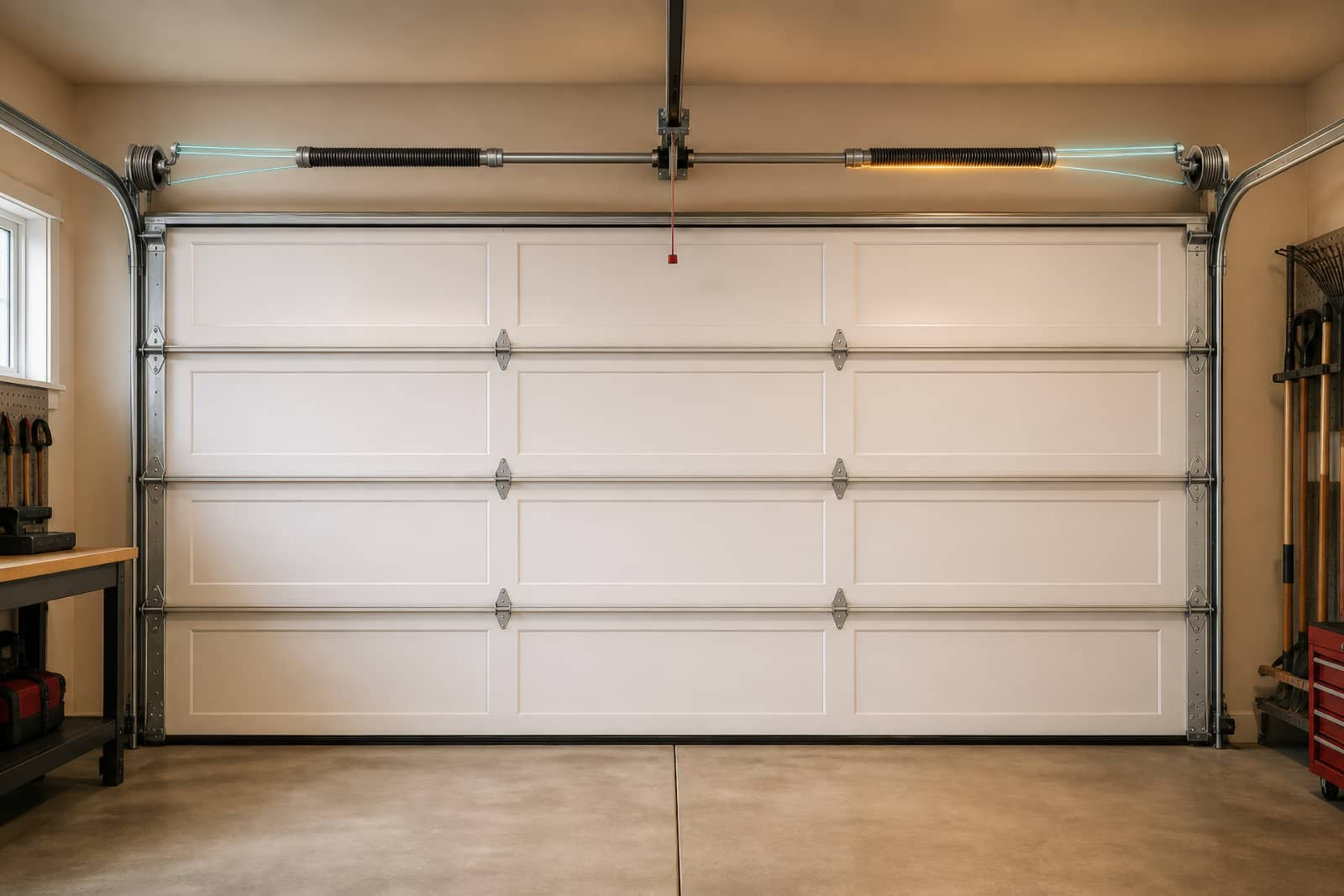
Start by inspecting the springs, cables, and rollers for wear, corrosion, fraying, and deformation. You’ll want to look for gaps in extension springs, stretched coils, and rust that weakens steel.
Check cables for broken strands, kinks, or slack that shouldn’t be there. Spin each roller by hand; it should move smoothly without wobble, flat spots, or grinding. If you hear scraping or feel binding, the part may be nearing failure.
Don’t try to adjust a loaded spring yourself. Instead, mark anything questionable and replace worn components before they snap. This keeps your system balanced, reduces strain on the opener, and helps everyone in your home count on a door that opens cleanly, safely, and without surprise.
Check Tracks, Hinges, and Hardware
Next, inspect the tracks, hinges, and all visible hardware for looseness, wear, and misalignment. You’re looking for clean paths, tight fasteners, and metal that still supports smooth travel. If you spot damage, address it now so the door stays reliable and your home feels cared for.
Tracks: Check both vertical and horizontal sections for dents, rust, and gaps.
Hinges: Confirm each hinge sits flat and doesn’t show cracking, elongation, or bent knuckles.
Hardware: Tighten bolts, lag screws, and brackets before vibration worsens the wear.
Alignment: Verify the tracks stay parallel so the door doesn’t bind or scrape.
Keep the surfaces clean and the parts secure. That simple habit helps you stay ahead of repairs and keeps your garage door working like it belongs there.
Test Sensors and Opener Settings
Now test the safety sensors and opener settings to make sure the door responds correctly.
Close the door, then pass an object through each sensor beam; the door should reverse immediately. If it doesn’t, clean the lenses, realign the brackets, and confirm the indicator lights stay steady.
Next, check opener force, travel limits, and auto-reverse settings against the manufacturer’s specs. Run a full open-and-close cycle and watch for smooth starts, stops, and reversals.
If the door hesitates, bumps the floor, or drifts upward, adjust the settings in small increments.
Test the wall button, remote, and keypad so every control works reliably.
When you verify these details, you keep your garage safer, your system responsive, and your home routine on track.
Frequently Asked Questions
How Often Should a Garage Door Tune up Be Scheduled?
You should schedule a garage door tune up once a year; if you use the door heavily or notice noise, uneven movement, or slow response, you’ll want service every six months to keep everything safe and reliable.
Does a Tune up Improve Garage Door Energy Efficiency?
Yes, you can improve energy efficiency when you tune up your garage door. You’ll seal gaps better, align tracks, calibrate the opener, and keep rollers and springs moving smoothly, reducing air leaks and wasted energy.
Can I Perform a Garage Door Tune up Myself Safely?
Can you do it safely? You can handle lubrication, sensor cleaning, and visual checks, but springs and cables stay risky. If you’re unsure, you’ll protect yourself and fit right in by hiring a pro.
What Signs Mean My Garage Door Needs Immediate Service?
If your garage door jerks, grinds, reverses unexpectedly, sags unevenly, or won’t open fully, you need service now. You’ll also want help for broken springs, frayed cables, misaligned sensors, or a sluggish opener.
Will a Tune up Help Reduce Garage Door Noise?
Yes— a tune up can cut garage door noise by tightening hardware, lubricating rollers and springs, aligning tracks, and calibrating the opener. You’ll hear smoother operation, and your door should feel more reliable and secure.
Summary
Don’t let a small oversight become a costly breakdown. When you complete a garage door tune-up, you inspect springs, cables, rollers, tracks, hinges, sensors, and opener settings before wear turns into failure. You tighten hardware, restore alignment, and reduce strain on the system. Isn’t that what maintenance should do? You’re not just checking a door; you’re protecting safety, performance, and the life of your garage door with one practical 12-point service.
Recent Posts
Is a Garage Door Service Plan Worth It? An Honest Look at the Math
If your garage door is the main entrance, its service plan can change the math
Garage Door Lubrication Guide: What to Use, What to Avoid, and How Often
A little friction in your garage door can be a quiet warning before bigger trouble
Annual Garage Door Inspection: What a Pro Actually Looks At
If your door starts drifting open after you lift it halfway, a pro will check