
Contents
Many believe that commercial garage doors require minimal upkeep, but the truth is quite the opposite. Regular maintenance is vital for best performance and longevity. Are you aware of the specific tasks that can prevent costly repairs? Understanding how to properly maintain your garage doors can save you time and money, ensuring safety and efficiency in your operations. Let’s explore the essential steps to keep your doors in top condition.
Key Takeaways
- Conduct regular inspections of door functionality, focusing on hinges, tracks, springs, and safety features to ensure optimal performance and safety.
- Clean and lubricate moving parts, including tracks and rollers, to prevent dirt buildup and maintain smooth operation.
- Examine safety sensors for alignment and obstructions, ensuring they function correctly to prevent accidents.
- Tighten hardware and fasteners regularly, using stainless steel for durability; schedule professional inspections annually for thorough checks.
- Keep a maintenance log to track inspections, issues, and actions taken, adjusting maintenance frequency based on findings.
Inspecting and Testing Door Functionality
When inspecting and testing the functionality of commercial garage doors, it’s crucial to conduct these checks regularly to ensure peak performance and safety.
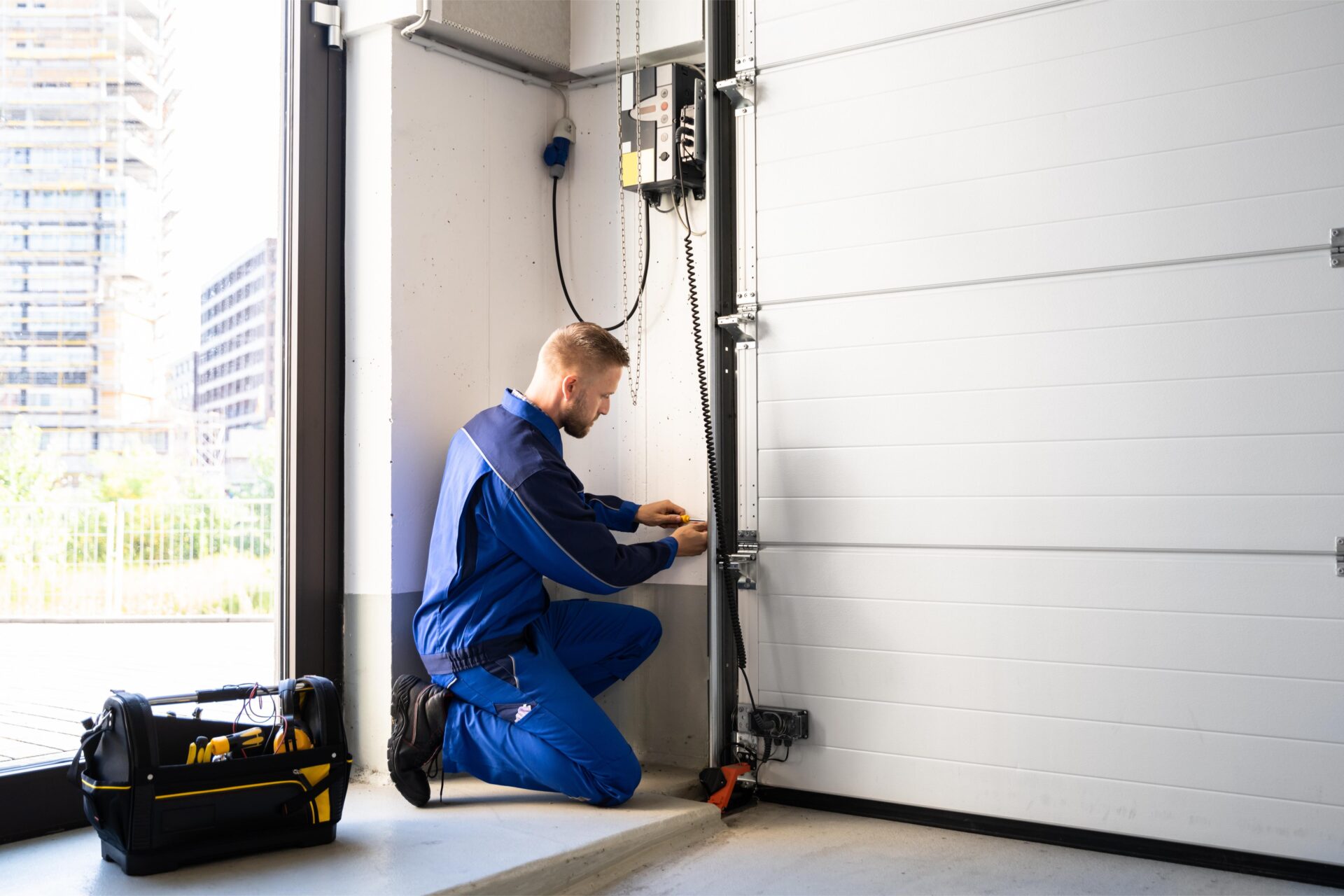
Start by examining the door for any visible wear or damage, focusing on hinges, tracks, and springs. Listen for unusual sounds during operation, as these can indicate mechanical issues that need addressing.
Check the door’s balance by disconnecting it from the opener and manually lifting it; it should stay in place without assistance. Verify that safety features, like photo-eye sensors, are functioning correctly to prevent accidents.
Regular functionality checks help identify potential problems before they escalate, assuring reliable door performance. Document your findings and schedule repairs as needed to maintain operational integrity.
Cleaning and Lubricating Moving Parts
To ensure smooth operation and extend the lifespan of commercial garage doors, it is essential to regularly clean and lubricate their moving parts.
Start by using effective cleaning techniques, such as a soft cloth and a mild detergent, to remove dirt and debris from tracks, rollers, and hinges. This prevents buildup that could hinder functionality.
After cleaning, it’s crucial to apply lubrication products designed for garage doors, like silicone spray or lithium grease. These products reduce friction and wear on moving components, ensuring efficient operation.
Pay special attention to the rollers and hinges, applying lubricant generously but avoiding over-saturation, which can attract dirt.
Finally, don’t forget to wipe away any excess lubricant to keep your doors clean and functioning effectively.
Checking and Replacing Weather Stripping
Checking and replacing weather stripping is essential for maintaining your commercial garage doors’ efficiency and insulation.
You’ll want to look for signs of wear, such as cracks or gaps, which can lead to energy loss and increased costs.
Understanding the replacement process will ensure your doors remain secure and protected from the elements.
Importance of Weather Stripping
Weather stripping plays an essential role in maintaining the efficiency and longevity of commercial garage doors, as it helps seal gaps that could otherwise allow air, water, and debris to enter the facility. Proper weather protection enhances energy efficiency, reducing heating and cooling costs while ensuring a comfortable environment.
| Type of Weather Stripping | Benefits | Replacement Frequency |
|---|---|---|
| Foam Tape | Insulates well | Every 1-2 years |
| Vinyl Weather Stripping | Durable against elements | Every 3-5 years |
| Rubber Seals | Long-lasting seal | Every 5-10 years |
Signs of Wear
Maintaining effective weather stripping is essential for commercial garage doors, but recognizing signs of wear is equally important.
Start by inspecting the weather stripping for any rust signs or deterioration. Look for cracks, tears, or gaps that could compromise insulation and security. You should also conduct dent detection along the edges of the door; dents can lead to misalignment, allowing elements to penetrate.
Pay attention to any noticeable drafts or moisture accumulation inside the garage, as these may indicate compromised weather stripping. Regularly checking these signs helps you maintain a secure and energy-efficient environment.
Replacement Process Steps
Before you begin the replacement process for weather stripping on commercial garage doors, it’s essential to assess the existing material for wear and damage. Once you’ve identified the need for replacement, consider your replacement material options, such as vinyl or rubber, based on your specific requirements.
Follow these installation techniques for ideal results:
| Step | Action | Emotion Evoked |
|---|---|---|
| Inspect | Check existing stripping | Awareness |
| Remove | Take off damaged stripping | Relief |
| Measure | Cut new material accurately | Confidence |
| Install | Attach with proper alignment | Satisfaction |
| Seal | Ensure airtightness | Security |
Examining Safety Features and Sensors
When it comes to commercial garage doors, safety sensors play a vital role in preventing accidents and ensuring smooth operation.
Regular inspections of these features are essential to identify any issues before they escalate. If you encounter problems, knowing how to troubleshoot sensor issues can save you time and maintain safety standards.
Importance of Safety Sensors
Safety sensors play an essential role in the operation of commercial garage doors, ensuring both user safety and equipment longevity. These sensors detect obstacles in the door’s path, preventing accidents and injuries.
To maintain ideal performance, you need to regularly check for proper sensor alignment; misaligned sensors can lead to malfunction and potential hazards. Ensuring your garage doors meet safety compliance standards is vital for workplace safety and legal regulations.
Regularly inspect the sensors for dirt or obstructions that may hinder their function. By prioritizing the importance of safety sensors, you create a secure environment for everyone.
Proper maintenance protects users and enhances the durability of your garage doors, saving you time and money in the long run.
Regular Safety Inspections
Regular safety inspections are essential for ensuring your commercial garage doors operate smoothly and safely.
To maintain compliance with safety standards, you should conduct these inspections at least twice a year, or more frequently depending on usage and environmental factors.
During inspections, examine safety features like photoelectric sensors and emergency stops. Check for any misalignment or obstructions that could hinder their functionality.
It’s vital to confirm that all safety mechanisms respond correctly under various conditions.
By adhering to the recommended inspection frequency, you enhance the longevity of your garage doors and safeguard your employees and assets.
Regular checks foster a sense of security within your organization, reinforcing a commitment to safety.
Troubleshooting Sensor Issues
While you might overlook them, sensor issues can considerably disrupt the operation of your commercial garage doors. Properly functioning sensors are essential for safety and efficiency.
Here’s how you can troubleshoot sensor problems:
Check Sensor Alignment: Verify that the sensors face each other directly without obstruction.
Inspect Wiring: Look for loose or damaged wires that might affect sensor performance.
Conduct Sensor Cleaning: Wipe the sensor lenses with a soft cloth to eliminate dust or debris.
Test Functionality: Activate the doors and observe if they respond correctly to obstacles.
Tightening Hardware and Fasteners
Every few months, inspect and tighten the hardware and fasteners on your commercial garage doors to ensure optimal performance. Different hardware types, such as hinges, rollers, and tracks, require specific attention. Loose fasteners can lead to misalignment, causing operational issues.
Start by inspecting the bolts, nuts, and screws, confirming they’re secure. Pay attention to the fastener materials; stainless steel is preferred for its durability and resistance to rust, while zinc-plated options may be more cost-effective but less enduring.
Using the right tools, like a torque wrench, will help you achieve the proper tightness without over-tightening, which can damage components.
Creating a maintenance routine enhances safety and fosters a sense of responsibility and community among your team. By keeping everything tight and secure, you ensure the longevity and efficiency of your garage doors.
Monitoring Electrical Components and Wiring
To ensure your commercial garage doors operate smoothly, it’s crucial to regularly inspect the electrical components and wiring. Neglecting this can lead to unexpected failures and costly repairs.
Here’s how you can effectively oversee these critical elements:
Conduct Circuit Diagnostics: Regularly check the circuit connections to verify they’re functioning correctly and securely.
Perform Wiring Inspections: Look for any signs of wear, fraying, or corrosion in the wiring that could cause malfunctions.
Test Safety Sensors: Make sure the sensors are aligned and working properly to prevent accidents.
Examine Power Supply: Verify that the power supply is stable and there are no interruptions that could affect door operation.
Scheduling Professional Inspections
Regular monitoring of electrical components and wiring sets the stage for effective maintenance of your commercial garage doors, but it doesn’t replace the need for professional inspections. Scheduling these inspections is essential for ensuring safety and functionality. Ideally, you should have a professional inspect your garage doors at least once a year, but twice a year is even better, especially for high-use environments.
When selecting a professional, check their qualifications to confirm they have the necessary expertise in garage door systems.
| Inspection Frequency | Professional Qualifications | Recommended Actions |
|---|---|---|
| Annually | Certified Technician | Thorough check |
| Semi-Annually | Licensed Contractor | Detailed assessment |
| Quarterly | Experienced Specialist | Immediate repairs |
Keeping a Maintenance Log and Schedule
Consistency in maintenance practices is essential for the longevity of your commercial garage doors. Keeping a detailed maintenance log and schedule ensures you stay on top of necessary upkeep.
Here’s how to implement an effective system:
Determine Maintenance Frequency: Decide how often you’ll perform inspections and routine tasks, based on usage and manufacturer guidelines.
Use Log Templates: Create or download log templates to document all maintenance activities, including dates, findings, and actions taken.
Record Issues Promptly: As soon as you notice any irregularities, jot them down in your log to track patterns and address them swiftly.
Review Regularly: Schedule time to review your maintenance log monthly to identify trends and adjust your maintenance frequency as needed.
Recap
Maintaining your commercial garage doors is like tuning a fine instrument; each component must work in harmony for peak performance. By regularly inspecting, cleaning, and testing all parts, you ensure safety and efficiency. Don’t overlook the importance of professional inspections and a detailed maintenance log to track your efforts. By doing so, you’ll extend the life of your doors and prevent costly repairs, keeping your operations running smoothly and effectively.
Recent Posts
Steel vs Wood Garage Doors: A Head-to-Head Comparison
If you think garage door material is just a style choice, it isn’t. You’re also
Single vs Double Garage Door: Picking the Right Configuration for Your Home
Choosing between a single and double garage door affects more than looks. You need to
Garage Door Financing Options: Pay Over Time Without Surprises
Most of homeowners delay big repairs because of cost, and a new garage door can