
Contents
When your garage door spring breaks, it’s vital to act quickly and safely. Knowing the right steps can prevent injury and further damage. You’ll need to assess the situation, gather the necessary tools, and identify the type of spring involved. Understanding these elements will set you on the right path to a successful replacement. Let’s explore the essential tips that will guide you through this process efficiently.
Key Takeaways
- Inspect the garage door springs for visible damage and ensure the door moves smoothly before attempting to replace them.
- Wear safety gear, including gloves and goggles, to protect yourself during the replacement process.
- Identify the type of springs (torsion or extension) and ensure you have the correct replacement parts for your door.
- Adjust spring tension carefully and precisely to maintain proper door balance and functionality after replacement.
- If issues exceed your repair capabilities, prioritize safety by consulting a professional for assistance.
Assessing the Situation Before Replacement
Before you plunge into replacing your garage door spring, it’s crucial to assess the situation thoroughly. Start by examining the spring wear; inspect for any visible cracks or signs of damage. Worn springs can lead to improper door balance, causing the door to function inefficiently or even become dangerous.
Check how the door moves; it should open and close smoothly without excessive effort. If the door seems heavy or tilts to one side, it indicates an imbalance that likely stems from a failing spring.
Next, observe the door’s alignment; any misalignment can worsen the wear on the springs and other components. Verify the tracks are clean and free of obstructions.
Safety First: Precautions to Take
After evaluating the condition of your garage door springs, it’s imperative to prioritize safety throughout the replacement process.
First, make sure you’re equipped with appropriate safety gear, including gloves, goggles, and a sturdy pair of work boots. These items will protect you from potential injuries during the job.
Next, ensure that your workspace is clear of any hazards. Keep children and pets away from the area to prevent accidents.
It’s also wise to have emergency contacts readily available, just in case something goes wrong. This includes local medical services and a reliable friend or family member who can assist you if needed.
Finally, take your time and follow all safety protocols. Rushing can lead to mistakes that may result in injury or further damage.
Tools Required for Garage Door Spring Replacement
To successfully replace garage door springs, you’ll need a few essential tools that ensure both efficiency and safety during the process. Here’s a list of garage door tools and spring replacement tools you’ll require:
| Tool Name | Purpose | Quantity Needed |
|---|---|---|
| Wrench | To tighten or loosen bolts | 1-2 |
| Pliers | For gripping and twisting | 1 |
| Safety Glasses | To protect your eyes | 1 pair |
| Torque Wrench | For precise tension adjustment | 1 |
Having the right tools at your disposal streamlines the replacement process and assures your safety. Make sure to gather these garage door tools beforehand, so you’re well-prepared. With the right equipment, you’ll feel more confident tackling this task.
Identifying the Type of Garage Door Spring
How can you ensure the correct replacement of your garage door springs? First, you need to identify which type of spring your door uses.
Garage doors typically operate with either torsion springs or extension springs, and knowing the difference is essential for a successful replacement.
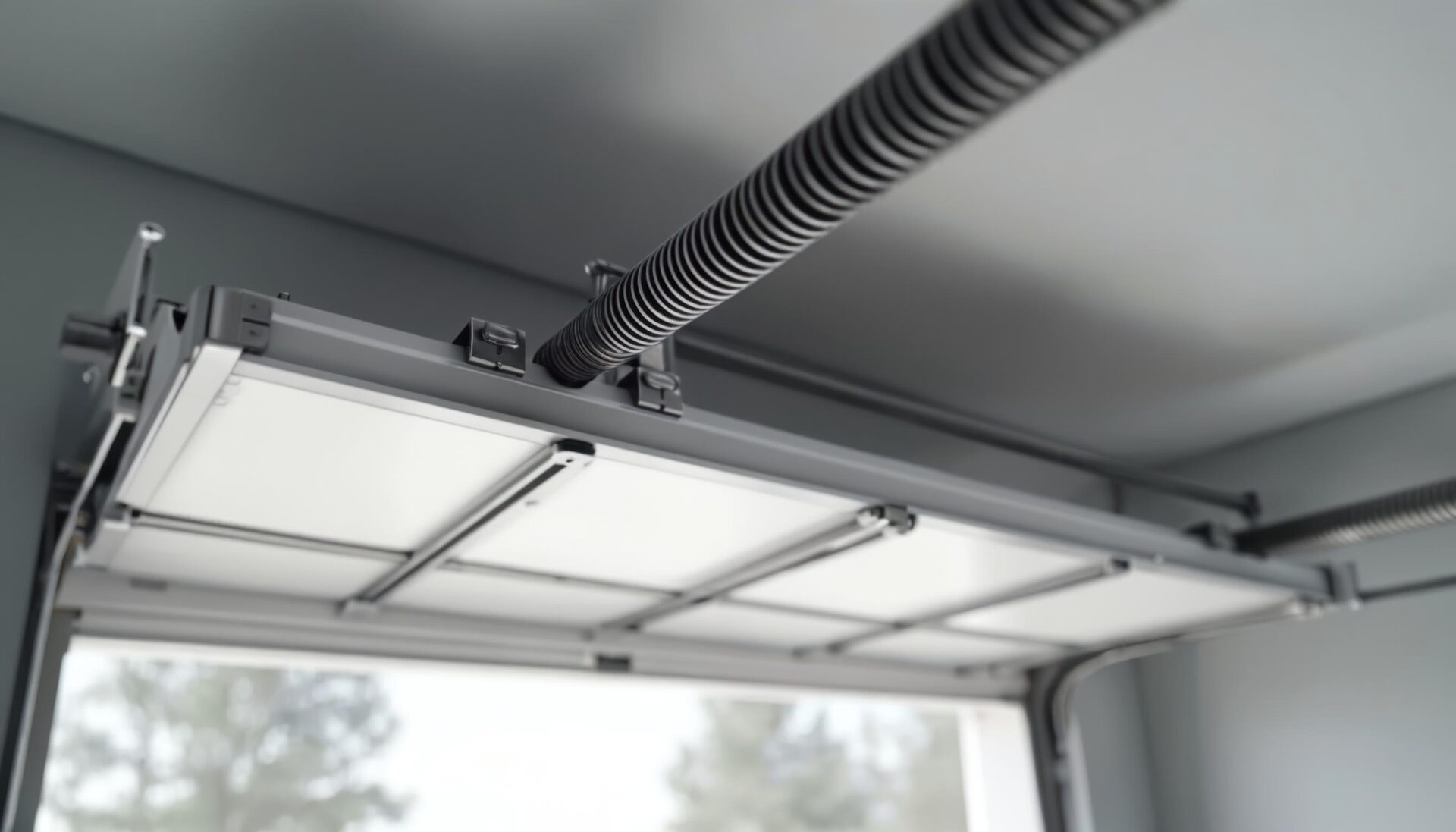
Torsion Springs: These are mounted above the door and work by twisting to lift the door.
Extension Springs: Found on either side of the door, these springs stretch and contract as the door opens and closes.
Weight and Size: Understanding the weight and size of your garage door can help determine the appropriate spring type.
Steps to Safely Remove the Old Spring
Begin by disconnecting the power to your garage door opener to confirm safety while you work. Next, gather your tools: a socket wrench, safety goggles, and gloves.
Use spring removal techniques that prioritize safety—start by carefully releasing tension in the springs. If you’re dealing with torsion springs, use winding bars to unwind them slowly. Always stand clear of the spring’s path as you release tension to avoid injury.
For extension springs, unhook them from the track and the brackets, confirming you keep your hands clear.
Employ safe disassembly methods by securing the garage door in the closed position before starting. This prevents unintended movement while you work.
As you remove the old springs, document their position and configuration for reference when installing the new ones. Taking these careful steps will confirm your safety and foster a sense of accomplishment in completing the task effectively.
Installing the New Garage Door Spring
Before you begin installing the new garage door spring, prioritize safety by wearing protective gear, including gloves and goggles.
Confirm you have the proper tools on hand, such as a winding bar and a socket wrench, to facilitate a smooth installation process.
Following these precautions will help you avoid accidents and confirm the job is done correctly.
Safety Precautions First
When replacing a garage door spring, prioritizing safety precautions is vital to prevent accidents and injuries. You should equip yourself with the necessary safety gear and familiarize yourself with emergency procedures before starting the replacement process.
Here are some essential safety tips to follow:
- Always wear protective eyewear and gloves.
- Keep bystanders, especially children, away from the work area.
- Verify the garage door is fully closed and unplugged before beginning.
Proper Tools Required
Having taken the necessary safety precautions, you’re ready to gather the proper tools for installing your new garage door spring.
First, identify the spring types you’re working with—torsion or extension—as this determines the tools needed. For torsion springs, you’ll need a torque wrench, winding bars, and safety glasses.
If you’re dealing with extension springs, grab a pair of pliers, safety goggles, and a ladder.
Remember, tool safety is essential; always inspect your tools for wear before use.
Having the right tools on hand streamlines the installation process and ensures a safer working environment.
With everything gathered, you’re well-prepared to tackle the spring replacement confidently.
Adjusting Tension for Optimal Performance
To ensure your garage door operates smoothly, you must adjust the spring tension correctly.
Proper spring tension is essential for peak performance and safety.
Before making any adjustments, remember to prioritize safety precautions to prevent accidents.
Proper Spring Tension
Proper spring tension is essential for the ideal performance of your garage door, as it directly affects how smoothly the door operates.
When you make tension adjustments, make sure they’re precise, as improper tension can lead to malfunctions or safety hazards.
Here are some key points to take into account:
Balance: A well-balanced door requires the right spring tension for peak operation.
Wear and Tear: Over time, springs can lose tension, leading to uneven door movement.
Regular Maintenance: Check the tension regularly to prevent issues before they arise.
Safety Precautions First
Before diving into adjusting the tension of your garage door springs, it’s essential to prioritize safety.
First, make sure you’re wearing appropriate safety gear, including gloves and goggles, to protect yourself from potential injuries.
Next, create an emergency plan—know what to do if something goes wrong during the adjustment. This includes having a phone nearby to call for help and ensuring that children and pets are at a safe distance.
Always work with a partner if possible; having someone nearby can provide assistance if needed.
Remember, the tension in garage door springs is dangerous, so take your time and follow proper procedures.
Testing the Garage Door Functionality
Once you’ve replaced the garage door springs, it’s vital to test the door’s functionality to confirm everything is working correctly. A thorough garage door testing ensures safety and reliability, giving you peace of mind.
Listen for Unusual Noises: Pay attention to any grinding or squeaking sounds that may indicate misalignment.
Check the Balance: Disconnect the opener and manually lift the door halfway. It should stay in place without falling or rising.
Observe Movement: Watch for smooth operation as you open and close the door. Any stuttering can signal issues.
Conducting a proper functionality assessment will help you identify potential problems early on. If you notice anything out of the ordinary, it’s vital to address it immediately.
Regular Maintenance Tips to Prevent Future Issues
To ensure your garage door operates smoothly and avoids future issues, regular maintenance is essential. Start with preventive inspections every few months. Check for worn-out parts, misaligned tracks, and any signs of rust or corrosion. These checks can help you identify potential problems before they escalate.
Establish a lubrication schedule to keep moving parts functioning effectively. Apply garage door lubricant to hinges, rollers, and springs, ensuring they don’t wear out prematurely.
Don’t forget to clean the tracks and remove any debris that might obstruct the door’s movement.
Additionally, test the auto-reverse feature monthly to ensure safety. During your inspections, tighten any loose screws or bolts to maintain stability.
When to Call in Professional Help
Even with regular maintenance, there are times when calling in a professional becomes necessary. Recognizing these moments can save you time, money, and potential hazards.
Watch for these emergency signs that indicate it’s time for a professional assessment:
Unusual Noises: Grinding or popping sounds during operation.
Visible Damage: Frayed cables or broken springs.
Difficulty Operating: The door doesn’t open or close smoothly.
If you notice any of these signs, don’t hesitate to reach out to a garage door expert.
Attempting repairs without proper knowledge can lead to further damage or injury.
Professionals have the experience and tools to handle complex issues safely and efficiently.
Prioritizing your safety and the long-term functionality of your garage door is crucial.
Trusting a qualified technician ensures peace of mind and a job done right.
Summary
Tackling a garage door spring replacement can be intimidating, but following these tips can ensure your safety and success. Prioritizing safety, using the right tools, and knowing when to call a professional can help prevent accidents. Regular maintenance can also keep your door functioning smoothly, reducing the likelihood of emergencies. Stay proactive, and you’ll keep your garage door in top shape!
ca
Recent Posts
10 Best Affordable Garage Door Brands Reviewed
Choosing a garage door is like picking the right outfit for a big event; it
Cost-Effective Garage Door Repair Tips & Techniques
Your garage door is like the guardian of your home, quietly protecting your belongings. When
Expert Techniques for Garage Door Repair Success
When tackling garage door repairs, understanding the common issues you might face is vital. From