
Contents
If your garage door panel is cracked, dented, or warped, you may be facing more than a cosmetic issue. You’ll want to judge whether the damage is isolated or part of a larger structural problem, since that can change the repair strategy. Matching the panel’s model, material, and finish matters more than you might think, and the garage door panel replacement process can reveal issues you didn’t expect.
Key Takeaways
- Cracks, dents, warping, or rust on a single panel often signal it should be replaced.
- Panel replacement works best when damage is localized and the door’s other parts are in good condition.
- If multiple panels are bent or the door structure is weakened, full door replacement is usually better.
- A replacement panel must match the door’s model, material, finish, thickness, and embossing pattern.
- Professional replacement includes safety checks, panel alignment, and final testing of balance and sensors.
Signs Your Garage Door Panel Needs Replacement
If your garage door panel shows cracks, dents, warping, or rust, it may need replacement. You should inspect the panel’s surface, edges, and seams for separation, bowing, or impact marks.
If the panel no longer sits flush with the others, you’ll see uneven gaps, rubbing, or binding during movement. Listen for new scraping or popping sounds, since they often signal structural damage.
Check for faded insulation, chipped paint, or moisture intrusion, too; these signs can weaken the panel and affect alignment.
When damage stays localized to one section, garage door panel replacement can help you keep your door system working smoothly and looking consistent.
You’re not alone in dealing with wear, and a precise inspection helps you act before problems spread.
When Garage Door Panel Replacement Makes Sense
Garage door panel replacement makes sense when the damage is limited to one or two sections and the rest of the door still operates correctly.
You can target visible dents, cracks, or rust spots without disrupting the entire system. If the panel matches your door model, material, and finish, a swap keeps the look consistent and preserves a clean curb line.
You also benefit when the opener, tracks, rollers, and springs are in good shape, because they’ll support the new panel properly.
This approach works best for homeowners who want a practical fix and a door that still feels like part of a well-kept home. A proper match lets you restore function, maintain safety, and stay with your garage community’s standards.
Repair vs. Replace the Whole Door
A panel swap works well for localized damage, but it’s not always the best fix for the long term. If you’ve got one cracked section and the rest of the door runs smoothly, repair usually saves money and keeps your system in service.
But if you see multiple bent panels, rust, sagging, or repeated track strain, replacing the whole door can be the smarter call. You’ll avoid chasing fresh failures and reduce labor costs over time.
A full replacement also makes sense when safety parts are worn or the door’s structure has weakened. You want a setup that feels solid, works with your home, and keeps your household in the loop.
Choose the option that protects performance, reliability, and your budget.
How to Match a Garage Door Panel
Matching a garage door panel starts with the exact model, style, color, and material, since even small differences can affect fit and appearance.
You’ll want to check the manufacturer label, measure the panel, and compare hinge and window layouts before you order.
- Verify the model number on the door edge or inside track.
- Match the embossing pattern, grain, and finish.
- Confirm paint code, texture, and age-related fading.
- Compare thickness and reinforcement points.
If you can’t find an exact match, a close match from the same product line may still blend well after painting.
Working with a supplier who knows your door series helps you stay confident, avoid mismatches, and keep your home looking like it belongs in the neighborhood.
What to Expect During Garage Door Panel Replacement
Once you’ve ordered the right panel, expect the technician to inspect the door, unload the damaged section, and verify spring tension before removing anything.
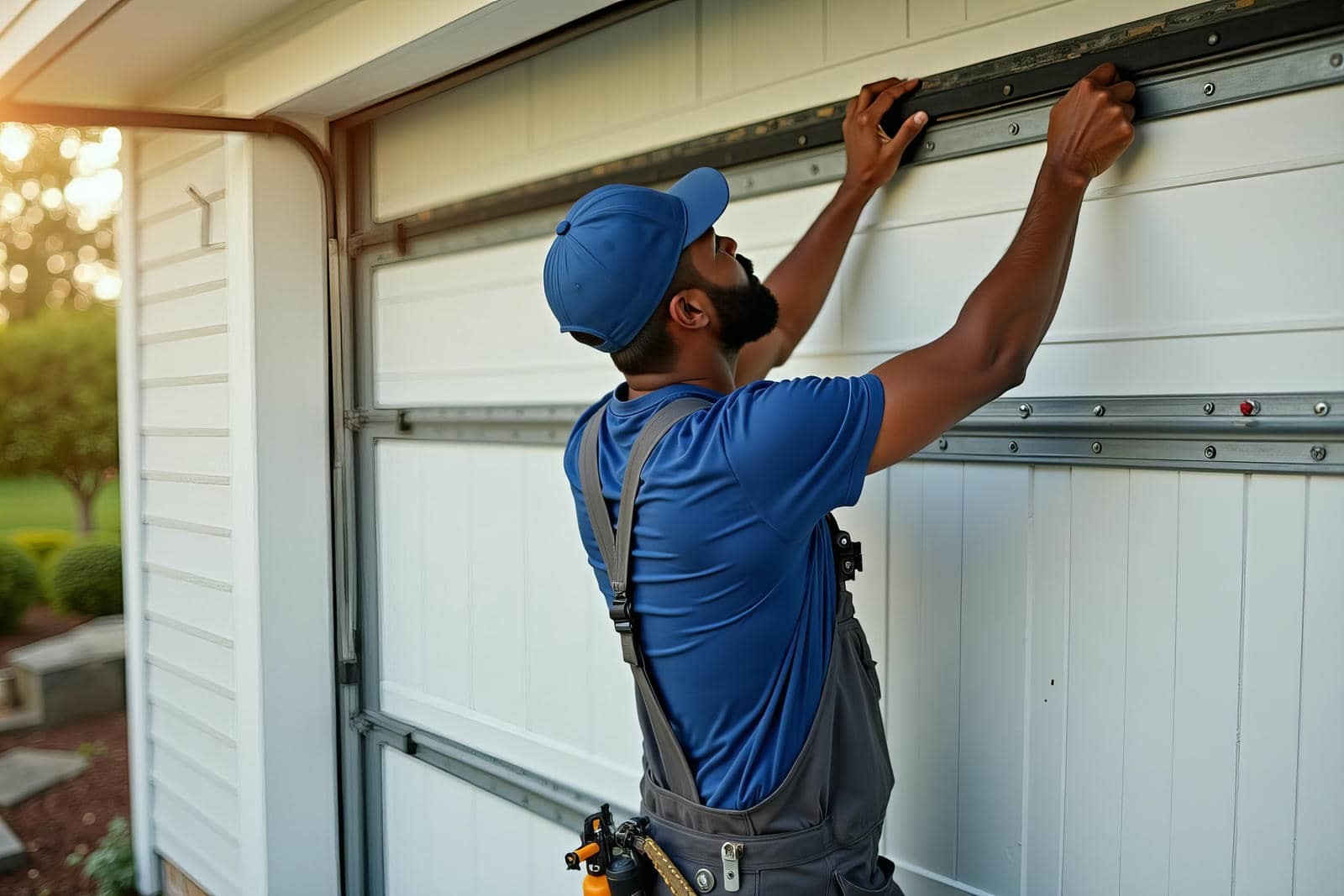
You’ll usually see the opener disconnected, the door clamped, and the rollers eased out one by one. Then the damaged panel comes free, and the new one slides into the same track alignment.
Your tech checks hinge spacing, fasteners, and seal contact so the door stays square and quiet. After reassembly, they test balance, opener travel, and safety sensors.
You should watch for smooth movement and even gaps across every section. If the frame is bent, multiple panels are warped, or the finish won’t match, replacement may be the smarter call.
That’s how you protect the whole setup together.
Frequently Asked Questions
How Much Does a Garage Door Panel Replacement Cost?
Garage door panel replacement usually costs $150 to $700 per panel, plus labor. You’ll pay more for custom doors, matching finishes, or insulated panels. If damage is widespread, you’ll probably need full replacement instead.
Can I Replace Just One Garage Door Panel?
Yes, you can often replace just one garage door panel if the model matches and damage is isolated. You’ll need compatible parts and proper alignment; otherwise, replacing the full door may be smarter, safer, and more durable.
How Long Does Garage Door Panel Replacement Take?
Usually, you’ll need 1–3 hours. If your panel matches and hardware’s accessible, you’ll finish faster; mismatched parts can double the time. You’ll keep your garage looking unified, not patched, and avoid unnecessary full replacement.
Will a Replaced Panel Affect My Garage Door Warranty?
Yes, it can. You’ll usually keep warranty coverage if you use approved parts and a qualified installer, but you might void it with mismatched panels or DIY work. Check your warranty terms before replacing anything.
Should I Hire a Pro or Replace the Panel Myself?
Hire a pro if you want safety and precision; your garage door’s springs and alignment can be a ticking time bomb. DIY only if you’re experienced, have the tools, and can match panel specs exactly.
Conclusion
If your garage door panel is cracked, dented, or warped, you should act quickly. You can often replace a single panel when the damage is localized, but you should compare repair costs against a full-door replacement. Match the model, material, and finish carefully so the result blends in. During installation, a technician can verify safe operation and proper alignment. Addressing panel damage now keeps your door running smoothly and stops small problems from snowballing.
Recent Posts
Can You Open a Garage Door With a Broken Spring? Safety First
Yes, you can sometimes open a garage door with a broken spring, but you shouldn’t
Signs of a Failing Garage Door Spring You Shouldn’t Ignore
When your garage door starts acting a little off, you might be dealing with more
Garage Door Spring Lifespan: What Determines When Yours Will Snap
Your garage door springs don’t fail on a calendar, but on cycles, load, and wear.